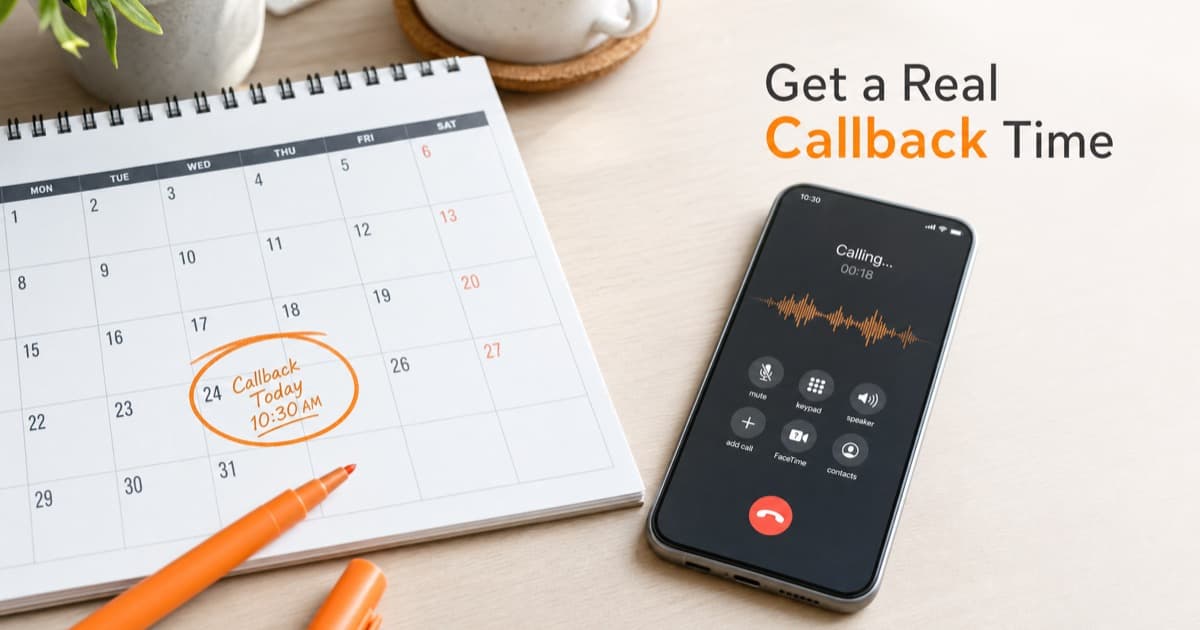
"Call me back later" is only a callback if it has a date attached, and most reps hang up without one. The fix is a light question about when they are generally less busy, then converting their own answer into a specific day and time. Here is the difference that makes.
The softest way a cold call ends with nothing
The call has not gone badly. Nobody sounded annoyed, nobody hung up, and then, right as you were about to get into the reason for the call, you hear it: "Can you call me back later? Now's not a great time." It is the softest possible way to end a cold call, which is exactly what makes it dangerous. It sounds like a scheduling problem, not a rejection, so most reps treat it like one and simply agree, thank the prospect, and hang up with nothing more than a vague promise to try again.
That promise almost never turns into anything. "Later" has no date attached to it, and without a date, the next attempt to reach this person competes with every other unscheduled task on their list, which means it usually loses. The rep walks away feeling like the call went fine, when what actually happened is the conversation ended with less information than it started with and no real commitment to continue it.
Three ways a vague later becomes a dead lead
Accepting "later" without asking when. The single biggest mistake here is treating "call me back later" as specific when it is not. A vague later is not a callback, it is a polite way of saying no without saying no, and reps who do not pin down a real time are agreeing to try their luck again from zero.
Apologizing for the interruption. Some reps respond to "not a great time" by over-apologizing, stacking three or four sorry's onto the exit, which signals that the rep believes they did something wrong by calling. That posture makes the next call, if it ever happens, start from an even weaker position.
Not finding out whether "later" is real. A genuinely busy prospect and a prospect using "later" as a soft exit sound almost identical in the first few seconds, but they call for completely different responses. Reps who do not probe at all end up spending equal effort chasing both, wasting time on the ones who were never going to pick up again.
Does "call me back later" ever mean later?
"Call me back later" covers a wider range of real situations than most reps assume, and each one has a different next move.
They are actually mid-task and the timing is real. Sometimes this is exactly what it sounds like: the prospect is walking into a meeting, mid-deadline, or otherwise genuinely occupied, and a callback would work fine if it landed at a better moment.
They want to end the call politely without committing to anything. Often "later" is a graceful exit from a conversation the prospect never wanted to have, offered because outright rejecting a stranger on the phone feels ruder than deferring. If this is the case, a vague future callback will get the exact same response.
They need a beat to decide if this is worth their time at all. Some prospects use "later" as a stall while they mentally sort whether the call is relevant enough to continue. A specific, low-effort next step can resolve that hesitation faster than a full callback ever would.
Where a vague promise becomes a calendar entry
Elke is a fictional procurement lead at Bellhaven Manufacturing. The rep sells a supplier-forecasting platform.
Accepting later at face value:
Rep: Hi Elke, this is Dana from Voss Analytics. We help manufacturers cut supplier lead-time surprises. Got a couple minutes?
Elke: Actually, now's not a great time. Can you call me back later?
Rep: Oh, of course, sorry to catch you at a bad time. I'll try you again soon. Have a good one.
Elke: Sounds good, thanks.
Dana accepted "later" at face value and left the call with nothing: no day, no time, no sense of whether Elke was genuinely busy or just easing her off the phone. Her "soon" is guesswork, and when she calls again next week, she is starting the entire conversation over, competing once more with whatever Elke is doing at that exact moment.
Pinning the window down:
Rep: Hi Elke, this is Dana from Voss Analytics. We help manufacturers cut supplier lead-time surprises. Got a couple minutes?
Elke: Actually, now's not a great time. Can you call me back later?
Rep: No problem at all. So I call you at a moment that actually works, are you usually less slammed in the mornings, or later in the day?
Elke: Mornings are worse, honestly. Afternoons are calmer.
Rep: Got it, afternoons it is. Would Thursday around two work, or is Friday better?
Elke: Thursday at two should be fine.
Rep: Perfect, I'll call Thursday at two. Quick heads-up on what I'll ask then: how your team currently gets warned about a supplier running late, since that's usually the gap we end up closing.
Dana did not push to keep Elke on the phone, which he had already said he could not do, but she also did not let "later" stay undefined. By asking a light, low-pressure question about when he is generally less slammed, she got Elke naming his own preferred window instead of her guessing at one, which made picking an exact day and time feel like his idea rather than her request. The one-line preview at the end gives Elke a reason to actually take the Thursday call instead of letting it become just another unknown number.
Drilling for a real time instead of a promise
Set up a cold call scenario with a moderately busy buyer persona so the "call me back later" brush-off surfaces naturally, early in the conversation. Goals for the practice run:
- When you hear "call me back later," resist the instinct to just agree and hang up.
- Ask a light question about when they are generally less busy, rather than demanding a specific slot outright.
- Turn their answer into an actual day and time before you end the call.
- Leave them with a one-line reason to want to pick up next time, not just a name they will not remember.
Run it once against a buyer whose timing objection is genuine, and once against a buyer using "later" as a polite exit. Getting a real callback time out of both, instead of a vague promise from either, is what this drill is for.