"I need to talk to my boss" is a handoff, not a stopping point, and the deal now depends on someone who did not build your pitch. Ask what the approver will push back on first, then hand your champion one artifact built around that specific concern. The two calls below diverge at exactly that question.
The good news that quietly loses your seat
You have gotten further than most cold calls ever go. The prospect answered questions, seemed to follow the value, and did not push back on price. Then, right as you angle toward next steps, they say it: "This sounds good, but I'd need to run it by my boss." It lands like good news wrapped in a delay, so a lot of reps just accept it, thank the prospect for their time, and wait to hear back.
Waiting is the mistake. "I need to talk to my boss" almost never comes with a plan for that conversation attached to it, and a prospect who liked what they heard from you is not automatically equipped to repeat it convincingly to someone else. If you let the call end there, you have handed your pitch to a person who did not build it, has not rehearsed it, and has no particular stake in getting it right.
Three ways the handoff gets made blind
Treating the objection as a stopping point instead of a handoff. The instinct is to relax once a prospect signals interest and defers to authority, because it sounds like the hard part is over. In reality the hardest part, getting someone else on board without you in the room, has not happened yet, and you just lost your seat at that table.
Not finding out what the boss actually cares about. Every manager weighs a purchase against a different set of concerns, cost, risk, time, whether it duplicates something already in place. A rep who does not ask what matters to that specific boss is sending the prospect into a conversation armed with your pitch instead of an answer to the actual question that will get raised.
Letting the prospect become your only messenger. Even a genuinely convinced prospect compresses and simplifies when they repeat something secondhand. Whatever nuance made your case land with them is the first thing to get lost when they summarize it in a hallway or a Slack message to their manager.
Is "I need to talk to my boss" a real deferral?
"I need to talk to my boss" covers a narrower range of situations than it sounds like, and each one calls for a different response.
They are the real decision-maker but want cover. Some prospects can approve the purchase outright but prefer not to, either out of habit or because they want a second opinion on record before committing. Here, the boss conversation is closer to a formality, and equipping the prospect well is usually enough.
The boss is a genuine approver with real veto power. In other cases the prospect can champion the idea but cannot sign off on it alone. This is where the handoff matters most, because a weak internal pitch can kill a deal the prospect genuinely wanted.
It is a stall to end the call without saying no. Occasionally "my boss" is invoked by someone who was never planning to move this forward and does not want to say so directly. If there is no real boss conversation coming, no amount of equipping helps, and the honest move is to find that out rather than keep chasing a meeting that will not happen.
What the champion walks away holding
Wouter is a fictional office manager at Halloway & Pierce, a mid-size accounting firm. The rep sells a client-onboarding software platform, and Wouter has been engaged through the whole call.
Accepting the handoff:
Rep: So that covers what the platform handles for a firm your size. Sound like something worth moving forward with?
Wouter: Honestly, I like it a lot. I'd need to run it by my managing partner though before I could commit to anything.
Rep: Totally understandable, that makes sense. Just let me know what they say and we can go from there.
Wouter: Will do, I'll get back to you.
The rep took "I'll get back to you" as a natural next step instead of a risk. Wouter liked the pitch, but nothing in this exchange gives him a way to represent it well to someone who was not on the call. The rep does not know what the managing partner actually weighs a decision like this against, has no material to hand off, and no real reason to expect Wouter will follow up rather than let the idea quietly stall.
Equipping the handoff:
Rep: So that covers what the platform handles for a firm your size. Sound like something worth moving forward with?
Wouter: Honestly, I like it a lot. I'd need to run it by my managing partner though before I could commit to anything.
Rep: Makes sense, that's a real decision to hand off. When you bring it to her, what's she usually going to push back on first, cost, whether it's worth switching from what you're doing now, or something else?
Wouter: Probably cost first, honestly. She's pretty tight on the budget this quarter.
Rep: Good to know. So if it's helpful, I can put together a one-page breakdown that lines up what you're spending now on manual onboarding against what this would run, so the cost conversation has actual numbers behind it instead of just your summary. Would that make it easier to bring to her?
Wouter: Yeah, that would help a lot actually. She responds better to numbers than a general pitch anyway.
Rep: I'll get that to you today. Would it also make sense for me to join a short call with the two of you, so she can ask anything directly rather than it going through you twice?
Wouter: Let me float that. I think she'd actually be open to it if the numbers look reasonable.
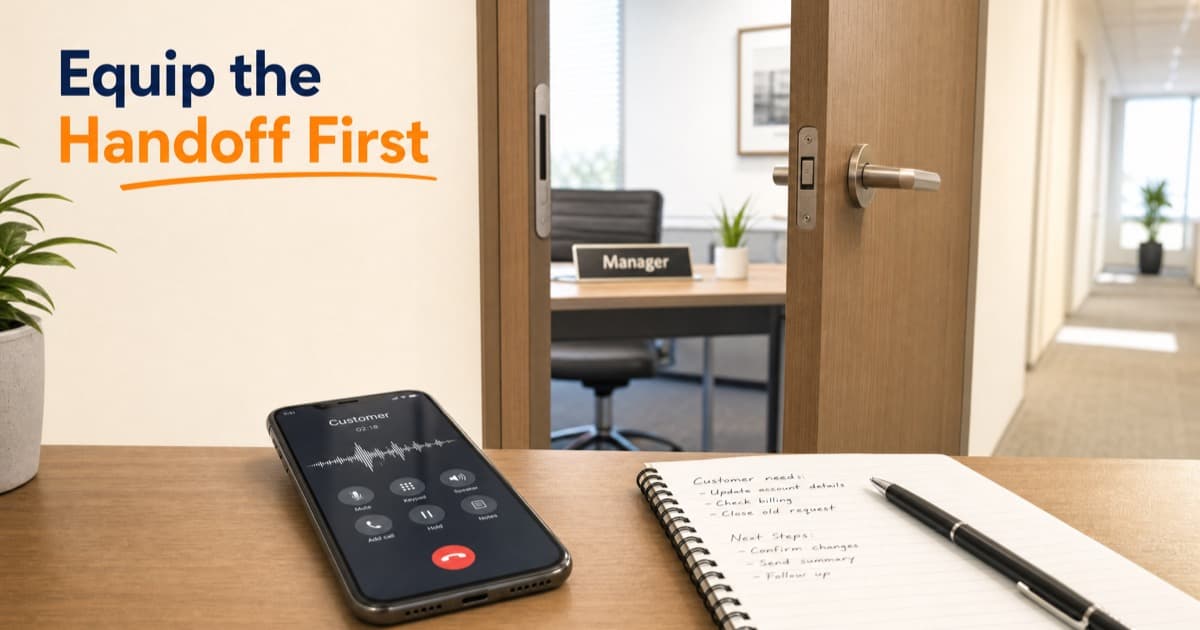
The rep did not accept the handoff blind. Asking what the managing partner pushes back on first surfaced the actual obstacle, cost, before Wouter had to guess at it himself in front of her. Instead of leaving Wouter to represent the pitch from memory, the rep gave him a concrete artifact built around the exact concern that was going to come up, and then offered to remove the handoff entirely by getting in the room. None of that requires Wouter to be a more convincing internal salesperson than he actually is.
Drilling the question that equips your champion
Set up a cold call or pitch scenario with a buyer persona who is genuinely engaged but not the sole decision-maker, so the "I need to talk to my boss" objection surfaces after real interest rather than as an early deflection. Goals for the practice run:
- When you hear it, resist ending the call with a vague "let me know how it goes."
- Ask what the actual approver is likely to weigh the decision against, cost, risk, timing, or something else specific to them.
- Offer a concrete piece of material or a joint conversation built around that specific concern, not a generic recap.
- Notice the difference between a prospect who answers that question specifically and one who cannot, since a vague answer is often a sign the boss conversation is not really coming.
Run it once against a buyer who can genuinely champion the deal internally, and once against a buyer using "my boss" as a soft way to end the call. Telling those two apart, and equipping the first one properly, is what this drill is for.