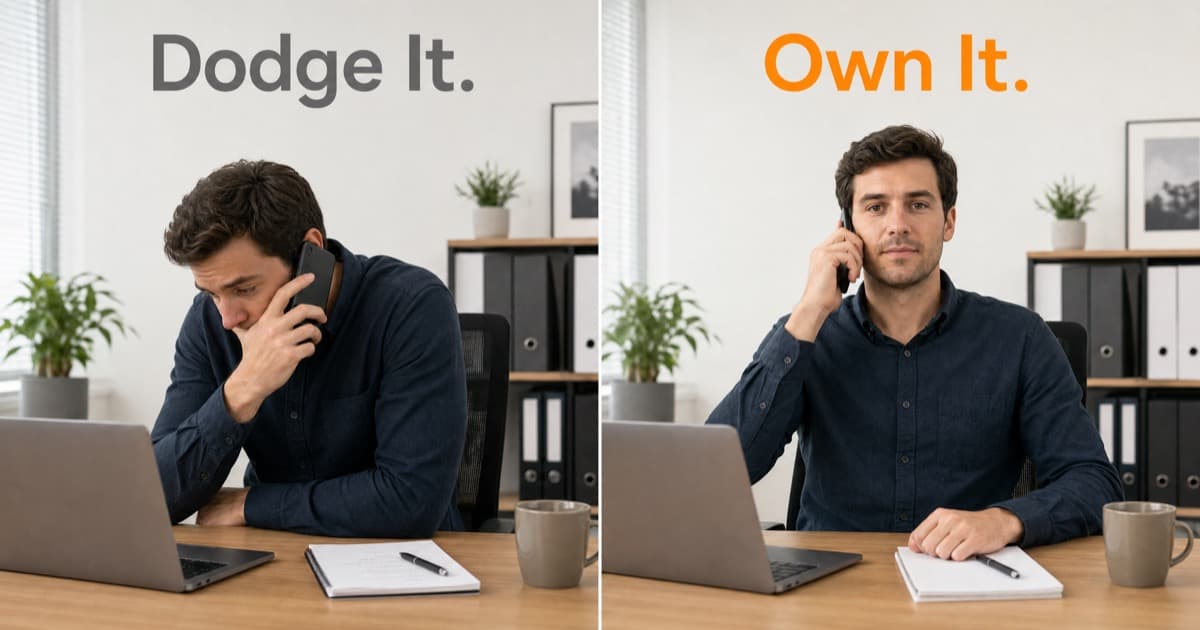
A cold call opener has one job that the rest of the pitch does not: surviving the first instinct to hang up. Openers that work lead with something specific to that account and ask a direct question instead of requesting a minute. The two versions below use the same product and differ only in the first fifteen seconds.
Ten seconds to earn the eleventh
The phone rings once, maybe twice. Someone picks up, already mid-thought, already annoyed at the interruption before they know who it is. You have roughly ten seconds before they decide whether this call is worth a third sentence, and most of what happens in those ten seconds isn't your product, your company, or even your reason for calling. It's tone, pace, and whether the first thing out of your mouth sounds like a stranger reading a script or a person who knows exactly why they dialed.
Most reps rehearse their pitch. Almost none rehearse the opener on its own, as a distinct skill with its own failure modes, separate from everything that comes after it. That's a mistake, because the opener isn't a shorter version of the pitch, it's a different job entirely: it has to survive the prospect's first instinct to hang up before any value has been explained. A cold call opener practice session that treats the first ten seconds as its own drill, not just the intro paragraph of a longer script, is what actually moves the number of calls that make it past "who is this."
Three habits that end the call before the reason lands
Leading with the company name and title instead of the reason for the call. "Hi, this is Sam from Padgett Solutions, we're a leading provider of..." burns four or five seconds establishing credentials nobody asked for yet, while the prospect's attention is already draining toward the hang-up button. By the time the actual reason for the call arrives, it's landing on someone who's already decided this is a sales call and stopped listening.
Apologizing for the interruption. "Sorry to bother you, I know this is out of the blue" is meant to sound polite, but it hands the prospect the frame: this call is an imposition, and they'd be within their rights to end it. Reps who open this way are negotiating against themselves before the prospect has said a word.
Rushing the whole opener into one breathless sentence. Nerves compress the opener into a run-on line delivered too fast to follow, which reads as anxious and unrehearsed rather than confident. The prospect can't process it, and confusion is just as fatal as annoyance when it comes to getting a second sentence.
What is the prospect deciding in the first ten seconds?
The person who picked up isn't evaluating your offer in the first ten seconds. They're running a much faster, much less generous filter.
They're deciding if this is worth their attention at all. The instinctive question isn't "do I need this," it's "is this a human with a real, specific reason for calling me, or a script." Specificity in the first sentence, something that sounds like it couldn't have been said to just anyone, is what tips that judgment.
They're listening for confidence, not content. Most prospects can't repeat what a cold caller said thirty seconds after hanging up, but they can tell you exactly how it felt: rushed, apologetic, scripted, or direct. Tone gets processed before words do, and a shaky opener signals low value regardless of what comes next.
They're looking for a reason to stay on, not a reason to hang up. A prospect who's mildly curious will keep listening through an awkward middle if the opener earned enough trust in the first few seconds. A prospect who wasn't given that reason will use the very next pause as their exit.
Fifteen seconds, transcribed
The rep sells field service scheduling software for a company called Vantage Route, cold calling Renee Castellano, VP of Field Operations at Corrigan HVAC Group, a mid-size regional HVAC service company with dispatch problems typical for their size.
The generic open:
Renee: This is Renee.
Rep: Hi Renee, sorry to bother you, this is Jordan calling from Vantage Route, we're a scheduling and dispatch platform built for field service companies like yours, do you have a quick minute?
Renee: Kind of in the middle of something, what's this about?
Rep: Totally understand, it'll just take a second. We help HVAC companies reduce truck rolls and improve technician utilization through smarter scheduling, I'd love to show you how it works.
Renee: We're pretty set with what we're using. Thanks anyway.
Nothing in the opener referenced anything specific to Corrigan HVAC. "Reduce truck rolls and improve technician utilization" is language that fits every field service company on the planet, which is exactly the problem: it signals a list, not a reason. The apology up front and the request for a minute both handed Renee permission to end the call, and she took it the moment a generic pitch confirmed her first guess.
The specific open:
Renee: This is Renee.
Rep: Renee, this is Jordan at Vantage Route. Quick reason for the call: I noticed Corrigan's been hiring dispatchers pretty steadily this year, that usually means same-day rescheduling is eating more time than it should. Is that actually a pain point for your team right now?
Renee: It's... actually yeah, that's a fair guess. Why do you ask?
Rep: We build scheduling software specifically for HVAC and field service dispatch, most of what we hear from ops leaders your size is that a single emergency call can knock the whole day's route out of order and someone ends up rebuilding it by hand. Does that sound familiar or is your setup different?
Renee: No, that's exactly it, we had a tech reshuffle three routes yesterday because of one no-show.
Rep: That's the exact scenario we're built around. I don't want to walk you through the whole thing cold, would fifteen minutes later this week work to see if it's actually relevant to how you're running dispatch, or would it make more sense to send you two minutes of video first?
The opener led with something specific to Corrigan, a hiring signal Jordan clearly did homework on, which told Renee this wasn't a blanket call before a single feature was mentioned. Asking a direct yes-or-no question instead of requesting "a quick minute" respected her time without apologizing for taking it, and it gave her an easy, low-commitment way to engage. Once she confirmed the pain was real, the rep didn't drift into a full pitch, they named the specific mechanism and offered a low-pressure next step in two forms, letting Renee pick the one that matched how much trust the first ten seconds had actually earned.
Drilling the opener as its own rep
Set up a cold call scenario against a buyer persona and treat the opener as its own rep, separate from the rest of the call. Goals for the practice run:
- Open with something specific to the account or the role, not a generic company description.
- Skip the apology. Ask a direct question instead of requesting permission for "a quick minute."
- Keep the whole opener under two sentences before you let the buyer respond.
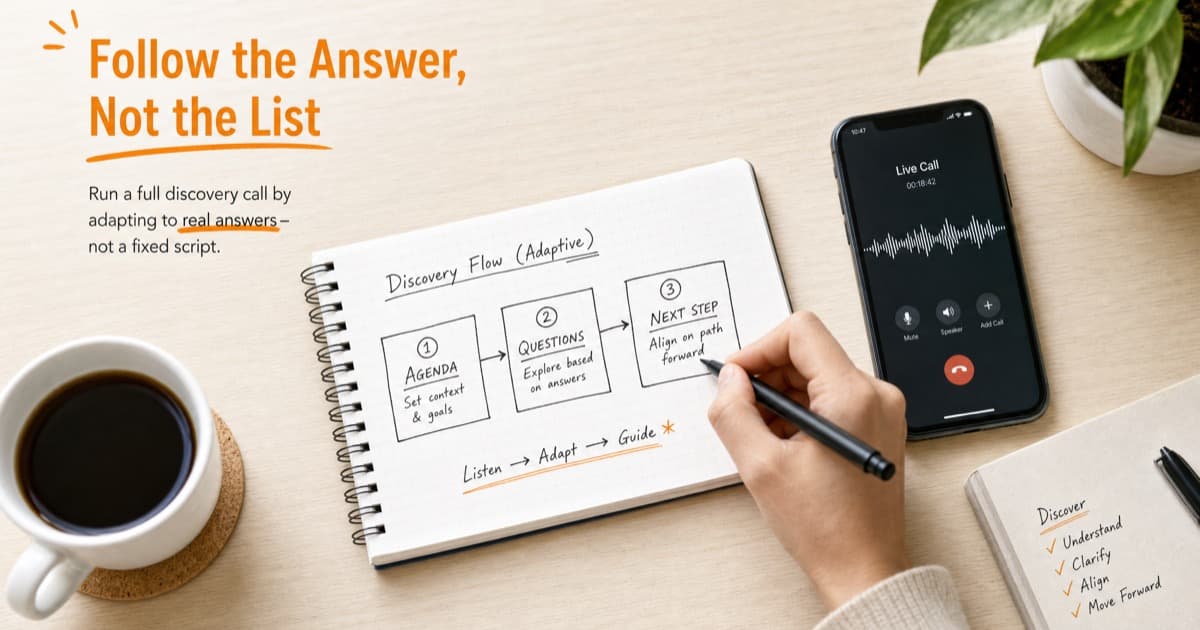
- Match your next line to how the buyer actually reacts, curious, guarded, or rushed, instead of continuing a memorized script regardless of the reply.
Run it once against a buyer who answers warm and curious, and once against a buyer who's clearly mid-task and short with you. An opener that only works on an easy buyer isn't a skill yet, it's a lucky script.