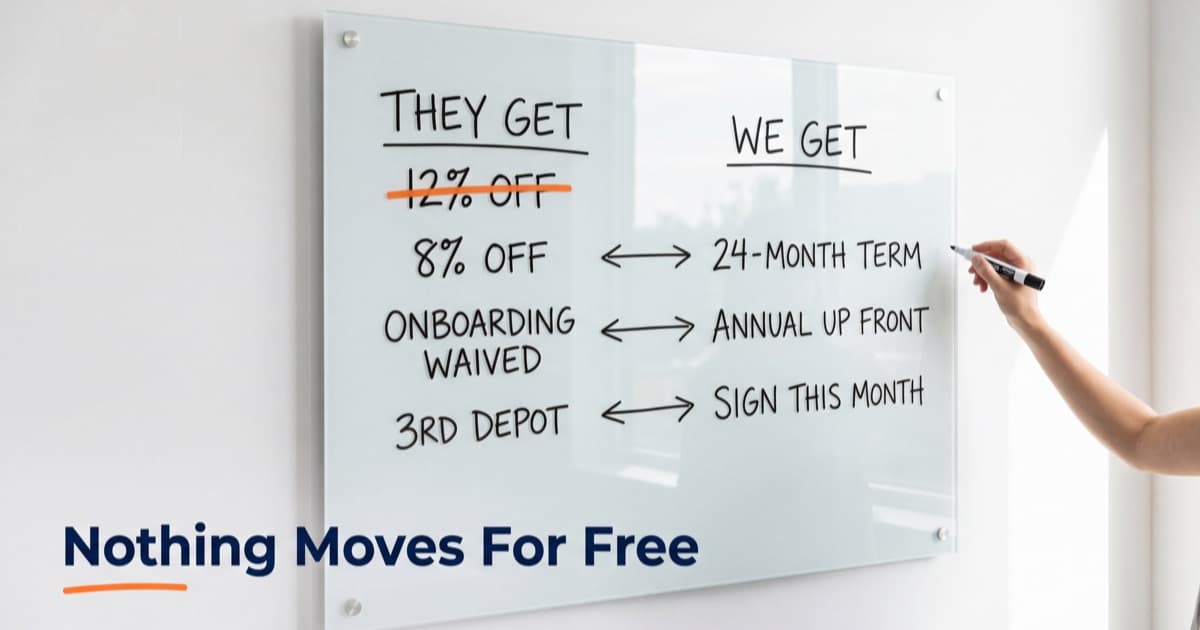
Catch a rep between calls and ask what to do when a buyer pushes back on price, and most of them answer correctly. Do not discount on the spot. Find out what they are comparing you against. If something comes off the price, something comes back the other way.
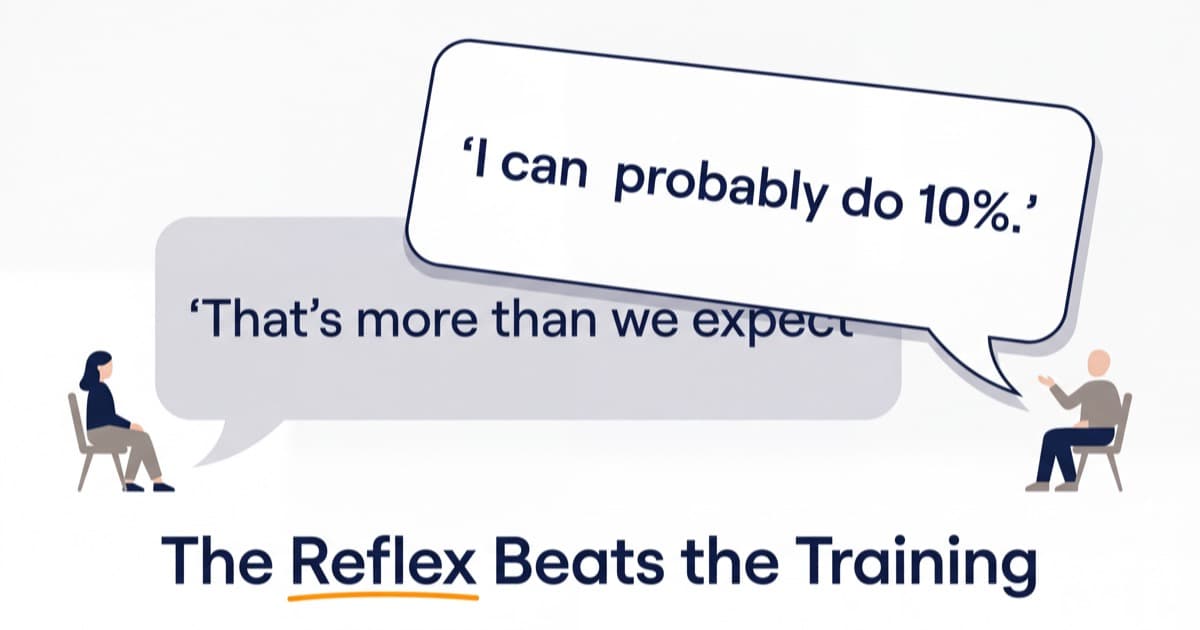
Then listen to the same rep on a live call. The buyer says the number is higher than they had in mind, and inside four seconds the rep has offered to see what finance might do on an annual commit.
That gap is wider on price than on any other objection. A rep who handles "we already have a vendor" calmly, who does not blink at "send me an email," still comes apart the moment a real number gets questioned. The fix is not another rebuttal to memorize.
Why is price the objection reps fumble most?
Price is the only objection where you have a private opinion about the answer.
Nobody flinches at "we already have a vendor," because no rep secretly agrees the buyer should keep theirs. Nobody flinches at "now is not a good time," because you know it usually is. But almost every rep has looked at their own pricing page and thought it is a lot to ask.
So when the buyer says it out loud, it does not land like an objection. It lands like an accusation you already half agree with, and the body answers faster than the training does. That is why the fumble is so consistent across otherwise good reps, and why it takes four recognizable shapes.
The instant concession. The buyer questions the number, and before they have finished explaining, there is flexibility on the table. What they learn is not that you are helpful. It is that the first number was not real, so the second one probably is not either, and the sensible move is to push again.
The justification avalanche. The rep answers the number with value, at length. Integrations, the support tier, the reporting, the roadmap. Every sentence is true and the whole thing reads as anxiety. Worse, you are defending a case the buyer has not made, because nobody has said yet what "expensive" meant.
The apology tell. "I know it is a big number." "We are honestly not the cheapest." Reps say these to sound human and they do the opposite: they confirm the price is a problem before the buyer has decided that it is. You cannot ask someone to defend a number you just apologized for.
The retreat. "Let me put a couple of options together and send them over." This one feels professional, which is what makes it dangerous. It converts a live conversation, where you could have found out what was actually wrong, into a document forwarded to people who will only see the number.
All four are the same move: make the discomfort stop, quickly. That instinct is the whole problem, because everything useful in a price conversation lives in the ten seconds you spend not stopping it.
Two moves, and the first one is silence
The first move is to say the number and then stop talking.
Not a rhetorical pause. An actual stop, long enough to be slightly uncomfortable. Most price fumbles happen in the gap the rep fills. The buyer says "that is more than we expected," and the sentence is unfinished. What follows it, if you let it arrive, is the real information: because we budgeted thirty, or because the last vendor charged half, or because a board approved a different number. You cannot answer any of those until you hear which one it is.
The second move is a sorting question, and it has to name the options. "Tell me more about that" is not one, it is a prompt to repeat the same sentence at greater length. Use something with branches in it:
"When you say it is high, is it high against a budget you already have, high against what you expected it to cost, or high against another quote?"
Those three answers go three different directions. A budget number makes it a conversation about scope, timing and terms, and the price may not have to move at all. An expectation gap is a value question, and usually a discovery miss earlier in the cycle. Another quote means the useful next question is what that quote includes, not what it says at the bottom.
One thing to do before either move: repeat the number without softening it. "Forty-eight thousand for the year, yes." Every layer of cushioning tells the buyer it is negotiable.
Where the pause changes the whole call
Annika Ostrowski sells for Quaystone, a fictional support quality platform. The buyer is Anders Braithwaite, head of customer support at Fernhill Retail Group, a fictional home goods retailer with a forty person support team. Third call, the number has just landed, and the annual figure is 48,000.
The fumble:
Anders: Right. Okay. That is a lot more than we had in mind, honestly.
Annika: Sure, and I hear that. Let me say up front there is usually some room, especially on an annual commitment rather than monthly, so we can work on the shape of it.
Anders: Okay.
Annika: And it is worth remembering what sits in there. Unlimited reviewers, the full scorecard build, the helpdesk and Slack integrations, coaching workflows, plus the analytics the team leads would be in every day.
Anders: No, it looks good. It is just a bigger number than I was working with.
Annika: Totally understood. Let me put a couple of options together at different levels and get those over today.
Anders: That would be helpful. Let me take a look and come back to you.
Four seconds in, Annika gave away that the price moves. Then she defended a value case Anders had not disputed, and he told her twice the product was not the issue. Then she ended the only conversation she was going to get by promising a document.
Notice what she never found out: whether Fernhill has a number, what it is, or who set it. "Let me take a look and come back to you" is not a next step. It is Anders leaving with a price he has no context for and options he will read alone.
The same call, handled:
Anders: Right. Okay. That is a lot more than we had in mind, honestly.
Annika: Forty-eight for the year, yes.
Anders: (pause) Yeah. I think we were mentally somewhere around thirty.
Annika: Is thirty a budget you already have approved, or is it what you thought this would come in at?
Anders: It is what I put in the planning sheet in November. Nobody has approved anything. I based it on what we pay for the survey tool now.
Annika: So thirty is an estimate off a survey tool, not a ceiling somebody gave you.
Anders: Correct. Although if I ask for eighteen more than I said, I need a reason that holds up.
Annika: Then let us build that reason rather than move the number. Last call you said the team leads each spend about six hours a week pulling ticket samples by hand. Six leads, so thirty-six hours a week copying tickets into a spreadsheet.
Anders: Roughly. More in peak.
Annika: What does a team lead cost you?
Anders: Fifty something.
Annika: So sampling eats close to a full salary a year, on the part of the job the platform does automatically. The forty-eight buys that back, and that is the version I can put in writing.
Anders: That is the framing I would need. Finance will still ask why now and not next year.
Annika: Fair. Say the sampling argument back to me the way you would put it to them, and I will tell you if any of it will not survive the room.
Anders: Sampling costs us about a lead's worth of hours a year, we are paying for it already without seeing it, and this replaces it and gives us the scorecard on top.
Annika: That holds. I will send that as three lines with the hours worked out, not a slide deck. Can we get twenty minutes with whoever signs it, with you in the room?
Same rep, same objection, roughly ninety extra seconds, and the price never moved.
The pause did most of the work. Annika's second line is four words, and Anders fills the gap with the number thirty, the most useful thing said on the call. The sorting question then turned thirty from a wall into what it actually was, a guess written in a planning sheet against an unrelated tool.
Look at where the value case finally appeared. Not as a defense of the price, but as raw material for the argument Anders has to make without her. That is the difference between justifying and equipping, and it is the test the objection handling guide applies to every objection: the answer has to survive being repeated by someone who was not on the call, which is why Annika asks him to say it back.
Where this still goes wrong
Silence is a beat, not a policy. If the buyer does not fill the gap, the question comes next. Holding a long silence to win a staring contest is a negotiation-book trick that reads as strange on a live call.
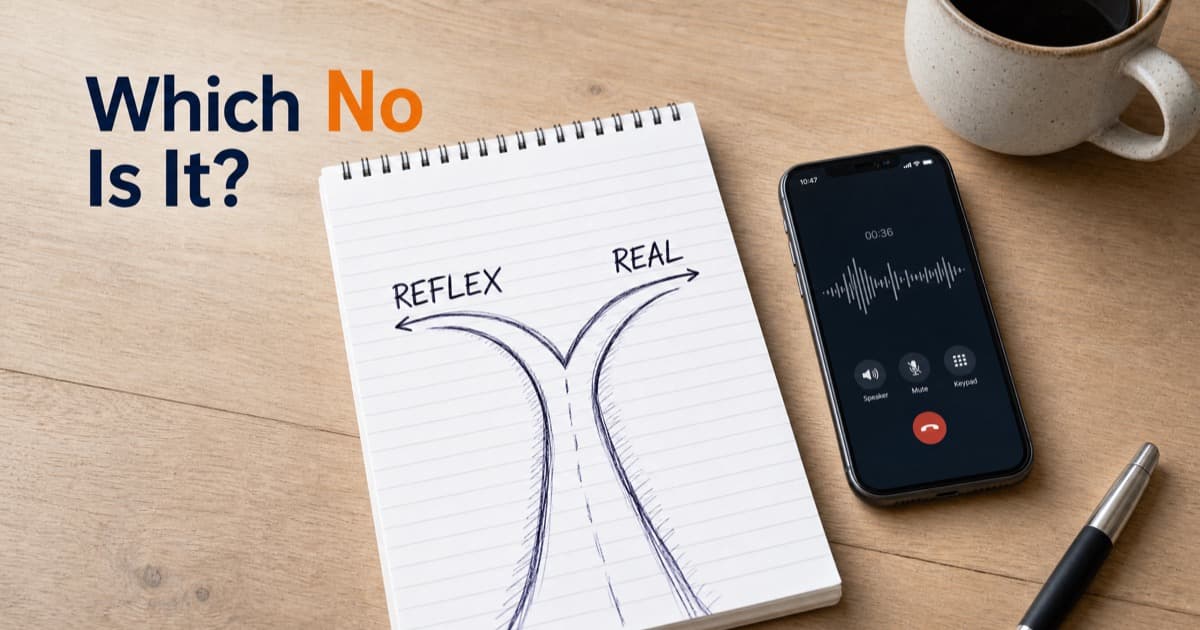
The sorting question has to be earned. On a first call with no discovery behind you, price pushback often is not about price at all, it is a polite way to end the conversation, and sorting a brush-off is how a two second exit becomes an interrogation. Tell them apart first, which is covered in brush-off vs real objection.
Not every price question is an objection. "What does it cost?" is a question. Answer it plainly and immediately. Evasion on a direct commercial question costs more credibility than any number will.
Discounting is not banned, it is priced. The rule is that nothing moves for free and nothing moves in the first four seconds. What you trade for it is its own subject, covered in the price negotiation guide.
Knowing this changes nothing on its own. The reflex fires before recall does, and the only thing that beats a reflex is having been in the moment enough times that the sorting question arrives ahead of the apology. That means hearing a real number get questioned out loud, repeatedly, somewhere the deal is not real.
Here is the check to run after the next call where price came up. Did you say the number and stop, or did you keep talking? You will remember. Reps always remember the sentence they wish they had not added.