What Should You Say When the Gatekeeper Asks What This Is Regarding?
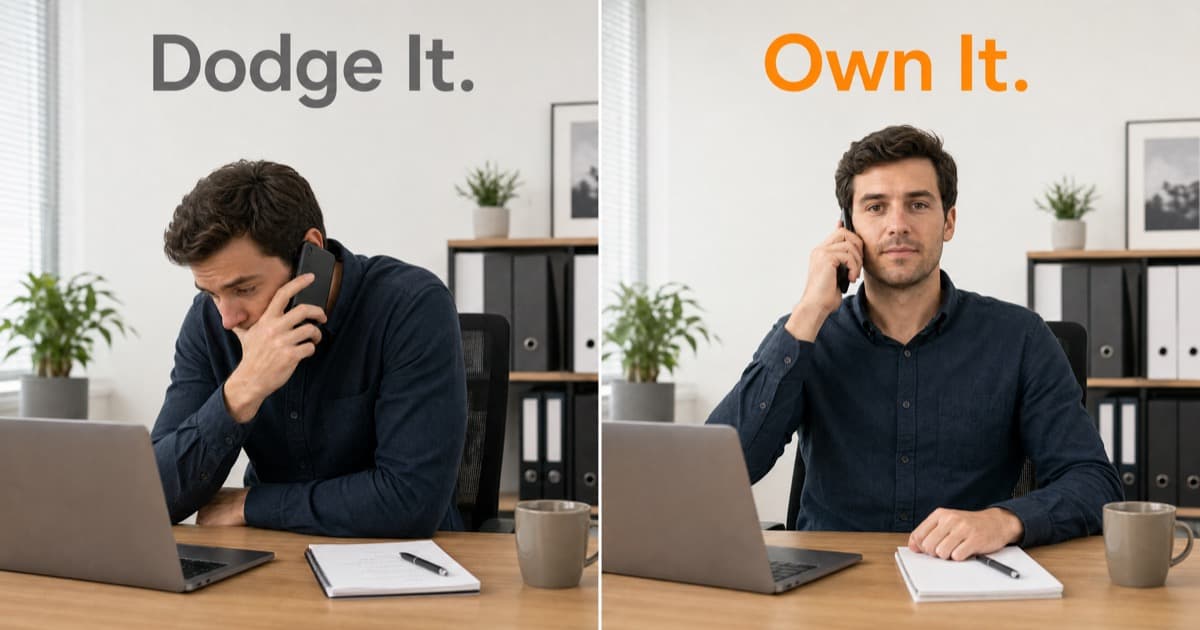
The question is four words long, and the person asking it decides what to do with your answer in about five seconds. When the gatekeeper asks what this is regarding, she is not asking for your pitch. She is deciding which pile your call goes in, and she needs a reason she can write on a message slip or say to her boss in one breath. So give her exactly that: say plainly that it is a sales call, then name one specific and true fact about their business in under 15 words, and ask about it. Do not hide what kind of call it is, and do not start explaining your product. A reason she can repeat gets passed on. A reason she would have to translate gets filed under "vendor."
The question arrives before your name has landed
You dial the main line of a mid-sized company and an office manager, a receptionist or an executive assistant picks up. You give your name and company, and before you can say anything else you hear it: "And what is this regarding?" Sometimes it is softer ("Can I tell him what it's about?") and sometimes it is a wall ("He doesn't take sales calls. What's it regarding?").
This is the most common moment on a cold call to a company that has a front desk, and it gets almost no practice. Reps rehearse the opener they will say to the decision maker. They rarely rehearse the sentence that decides whether they ever reach the decision maker at all. That sentence has to be ready before you dial, because the gatekeeper asks it early and without warning. The broader gatekeeper scenario covers the whole exchange; this page is about the one question inside it that does most of the screening.
Vague, clever or long: how reps get filed under sales
There are three common ways to fail here, and all of them come from wanting to avoid the word "sales."
The vague answer. "Just a quick business matter." "It's regarding his operations." These sound safe, but they give the gatekeeper nothing to pass on. She cannot write "a business matter" on a slip and expect her boss to call back. Vague reads as a vendor, so she treats it like one.
The clever answer. "I'm following up on our conversation," when there was no conversation. "It's personal." These sometimes get one transfer. Then the decision maker realizes he was tricked, and the gatekeeper remembers your name for the wrong reason. You have burned the account and the person who controls the phone line, which is a high price for one connection.
The long answer. "We help moving companies improve crew utilization and reduce overtime with an AI-driven scheduling platform that..." Every word is honest, and none of it is something she can repeat. A pitch asks the gatekeeper to evaluate your product, and she has no reason to do that work for you. She will offer you an email address instead.
What is the gatekeeper doing when she asks what this is regarding?
She is sorting. Most front desks handle a steady stream of calls: customers, suppliers, job applicants, people the boss knows, and salespeople. "What is this regarding?" is how she decides which of those you are and what happens next. Her real test is simple: if she puts you through, or leaves a message, can she defend that choice to her boss in one sentence?
Answers fall into a few piles, and each pile gets a predictable result:
| What you say | Example | What she usually does |
|---|---|---|
| Vague | "A quick business matter." | Takes a message that never gets returned, or sends you to voicemail |
| Disguised | "Following up on our conversation." (there was none) | Sometimes transfers once. Screens your name every time after |
| Pitch | "We help companies like yours increase efficiency with..." | Offers an email address and ends the call |
| Specific and honest | "It's a sales call, about the three weekend crew lead jobs you posted." | Repeats it to her boss, or answers the question herself |
The last row works for two reasons. First, it is about their business, not your product, so it sounds like something the boss might care about. Second, it is short enough to survive being repeated. If she says "It's a sales guy asking about the weekend crew openings," the boss knows exactly what he is picking up. That is far better than "Some guy, wouldn't say what for."
Notice also what the gatekeeper often knows. The person answering the phone frequently feels the problem you are calling about more directly than the boss does. Treat her as someone who might have the answer, not as a door.
Crispin, Hyacinth and the Saturday crews
Pellowe Moving & Storage is a family-owned mover with 22 trucks and three depots. Lavinia is the owner and general manager. Hyacinth runs the office: she answers the main line, books estimates and builds the crew schedule. Crispin sells Sterlow, crew scheduling software for movers. Before dialing, he noticed that Pellowe has posted three openings for weekend crew leads since October.
The pitch he was protecting:
Hyacinth: Pellowe Moving, this is Hyacinth.
Crispin: Hi Hyacinth, this is Crispin with Sterlow. Could you put me through to Lavinia?
Hyacinth: Can I tell her what this is regarding?
Crispin: Sure. We work with moving companies on operational efficiency, and I'd love about ten minutes with her to share how we've helped other movers your size.
Hyacinth: Is this a sales call?
Crispin: It's more of an introduction, really.
Hyacinth: She's out on estimates all week. Best thing is to send something through the contact form on our website, and I'll make sure she sees it.
Crispin did nothing rude. He did three things that sank the call. "Operational efficiency" is a phrase Hyacinth cannot repeat to Lavinia in any useful way. "Movers your size" is about Sterlow, not Pellowe. And "more of an introduction" dodged a direct question, which told Hyacinth that Crispin would not be straight with her. The email address is her polite way of closing a pile she had already chosen.
The sentence she could repeat:
Hyacinth: Pellowe Moving, this is Hyacinth.
Crispin: Hi Hyacinth, this is Crispin with Sterlow. Could you put me through to Lavinia?
Hyacinth: Can I tell her what this is regarding?
Crispin: It's a sales call, so I'll be quick. It's about the three weekend crew lead jobs you've posted since October.
Hyacinth: Oh. Those. What about them?
Crispin: Usually when a mover keeps reposting that job, Saturdays are getting covered with overtime. Is that what's happening here?
Hyacinth: I build that schedule. Last Saturday I had eleven moves and two leads. I was calling people at six in the morning.
Crispin: That's the problem we work on. Who decides how Saturday crews get staffed, you or Lavinia?
Hyacinth: She signs off, but she'll ask me. She's back Thursday. Can you do 4:30? I'll put you on her calendar and I'll sit in.
The turn came in the first answer. Crispin said "sales call" before Hyacinth could ask, which removed the reason to screen him. Then he named something she could check, the three job postings, and it happened to be a problem she lived with every Saturday. His next question was about Pellowe, not Sterlow. By asking who decides, he let Hyacinth place herself in the decision instead of standing in front of it. She did not just transfer him. She booked the meeting and joined it, which is the best result a gatekeeper call can produce.
The gatekeeper decides in one sentence. So should you.
ConvoSparr lets you practice out loud against an AI gatekeeper who asks what the call is regarding, screens vague and disguised answers the way a real front desk does, and scores whether your reason was specific, honest and short enough to repeat.
Fitting your reason on a message slip
Write your reason before every call, and test it against the slip. If the gatekeeper wrote it down word for word, would her boss know why to call you back? Then practice saying it until it comes out calmly the moment you hear the question.
- Find one checkable fact. A job posting, a new depot, a recent expansion, a service they just added. It must be public and specific. "Your growth" does not count; "the Riverside depot you opened in August" does.
- Turn the fact into a question about them. "Is that what's happening here?" or "How are you handling that?" The question gives the gatekeeper something to answer, and sometimes she is the person who knows.
- Say "sales call" first when it is one. The honest label costs you less than the dodge. Most gatekeepers relax when a caller is direct, because it makes their sorting job easy.
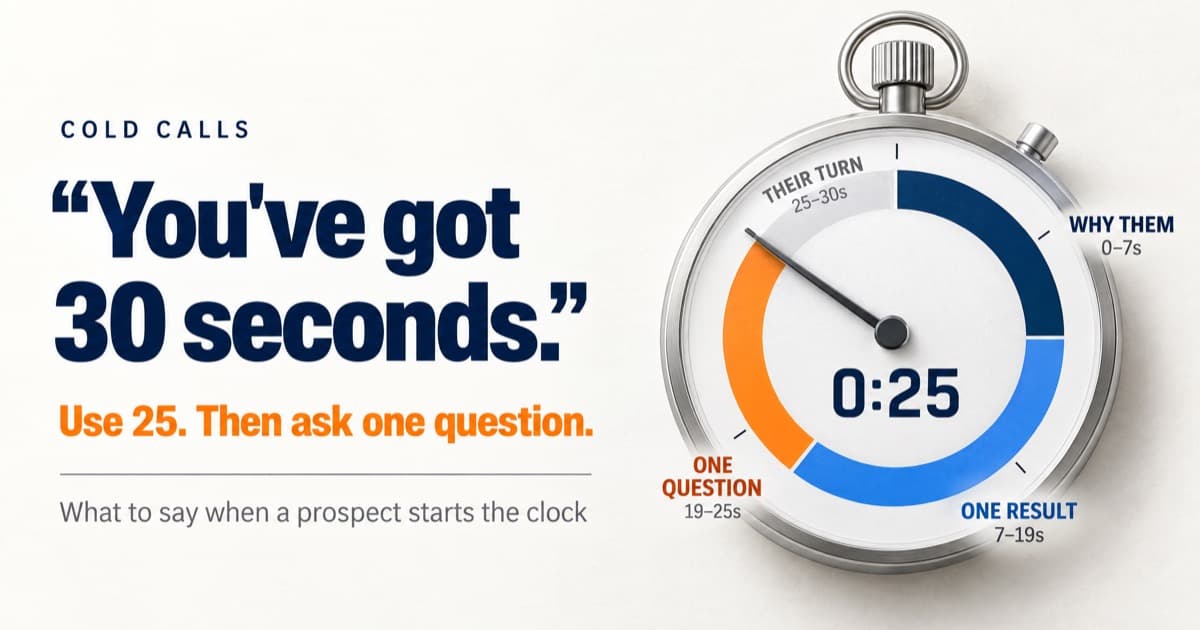
- Count the words. If the reason runs past 15 words, cut it. Label, fact, question. Everything else can wait for the decision maker.
Go back to the first five seconds. The gatekeeper is not asking what you sell. She is asking what she should write down. Hand her a sentence worth writing, and the next voice you hear is usually the person you called for.
Updated Nov 9, 2026
Run this scenario for real
ConvoSparr drops you into a live voice call with an AI buyer who runs this exact play. Handle it out loud, then get a transcript, scores, and coaching notes on how you did.
Free to start. No credit card required.