In March, an SDR moved his whole calling block to 8:00 a.m. because a widely shared study named that hour the best one. He got up earlier for six weeks. His connect rate moved by less than a point, his mornings got worse, and the two meetings he did book that quarter both came off dials placed late in the afternoon, on days he had run behind.
He had not done anything unreasonable. He had taken an average computed across millions of dials into hundreds of industries and applied it to one list of ninety accounts.
Here is the part the chart cannot tell you. The best time to make cold calls is the hour your specific list picks up, and no published study knows which hour that is, because it never saw your list. A borrowed window is a starting hypothesis. You get the real answer from about two weeks of your own dials, randomized across time bands, measured on conversations rather than connects, and read against the working rhythm of the one role you are calling.
What the best-time-to-call studies are measuring
They are measuring a very large pile of somebody else's dials, and they are usually measuring it honestly. The problem is the distance between that pile and your Tuesday.
Four things get flattened on the way to a headline hour.
The mix. An aggregate blends inside sales calling small businesses with enterprise reps calling directors. A shop owner and a VP of finance do not share a calendar, so the average hour belongs to neither of them.
The clock. Many datasets report the caller's local time, not the prospect's. If a good share of those dials crossed three time zones, the published peak is partly an artifact of where the callers sat.
The definition of a connect. Some studies count any answered line, gatekeepers and wrong numbers included. Others count a conversation. A window that wins on the first definition can lose on the second, because the hours a switchboard is staffed are not the hours a decision maker is at their desk.
The age. Hybrid work spread the office day out at both ends, so a number published before that shift describes a workday that no longer exists in the same shape.
None of this makes the studies useless. It makes them a prior, not a finding.
When is the best time to make cold calls?
For most business-to-business lists, connects cluster in two windows measured in the prospect's local time: roughly 8:00 to 9:30 in the morning, before their meeting block starts, and roughly 4:00 to 5:30 in the afternoon, after it ends. Midday, between about 11:30 and 2:00, is usually the weakest stretch. Tuesday through Thursday tends to beat Monday and Friday, though the gap between days is normally smaller than the gap between hours.
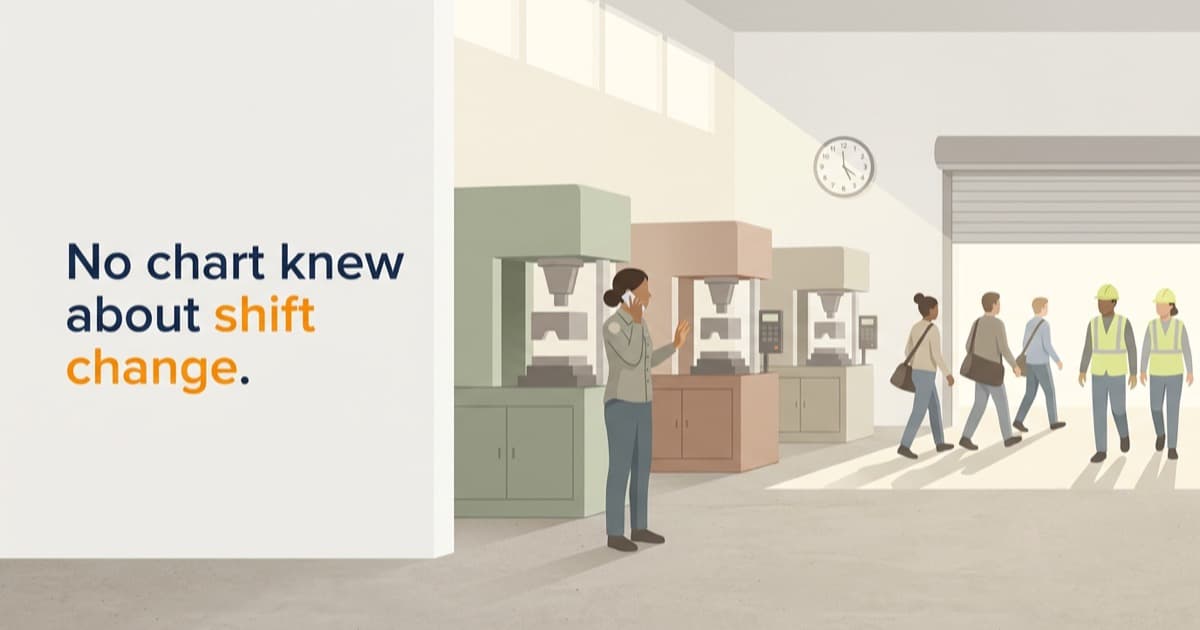
Treat that as the hypothesis you test first, not the answer. On a real list, the spread between the best and worst hour for your buyer is often two or three times the spread the aggregate reports, and it frequently peaks somewhere the aggregate never points to. Anyone calling a role tied to a shift, a route or a service bay is working a clock no office-hours chart describes.
The two-week timing test on your own dials
You do not need an analytics project. You need to stop calling in one habitual block and start spreading the same list across the day on purpose.
- Define four bands in the prospect's local time: 7:30 to 9:30, 9:30 to 11:30, 1:00 to 3:00, 3:00 to 5:30. Four is enough to find a shape and few enough to fill.
- Randomize accounts across bands, not by quality. If your best-fit accounts all land in the morning band because that is when you feel sharp, you have measured your own confidence.
- Fill each band to at least fifty dials. Two hundred dials over two weeks is an ordinary fortnight for most SDRs. Below about fifty per band, one talkative buyer moves the whole result.
- Freeze everything else. Same opener, same list, same call order. Test a new opening line during a timing test and you learn nothing about either. Settle the opener first, using the four openers and their replies in cold call opening lines.
- Log three outcomes per dial, not one: connected, held a conversation past sixty seconds, agreed a next step. Timestamp in the prospect's timezone, always.
Then read it. The three outcomes are worth recording because they disagree, and the disagreement is the useful part. A late-afternoon band often posts the highest connect rate and the lowest next-step rate, because people who answer at 4:50 are answering on their way out of the building. A mid-morning band can connect less and convert far better. Rank bands on next steps, and use connects only to explain the ranking.
A borrowed window against your own connect data
Every source of timing advice tells you something true and something misleading. Knowing which is which is most of the skill.
| Source | What it tells you | Where it misleads |
|---|---|---|
| A published aggregate study | The broad shape of a workday, and a sane place to start | Blends industries and timezones, and often counts answers rather than conversations |
| Your CRM's historical dial log | What your list has actually done, at no cost | Records the hours you chose to call, so it confirms your habit instead of testing it |
| A randomized two-week band test | A ranking of hours for this list and this role, on next steps | Needs discipline and volume, and expires when the list or the season changes |
| Team folklore ("nobody picks up on Fridays") | Occasionally a real pattern somebody noticed years ago | Usually a rule that emptied Friday of dials, then got proven by the empty Fridays |
| The role's own operating rhythm | Why a window exists, which is what makes it predictable | Requires you to know the job, and it varies inside a single title |
The last row outranks the rest and gets used least. If you know plant supervisors walk the floor at changeover, controllers vanish for the first four working days of a month, and clinic managers are unreachable while the schedule is full, you can predict a window before you have any data, and explain one you have already measured.
The 4:50 dial you cannot un-place
Tadeo sells downtime tracking at Ninebark, a fictional vendor. He is calling Bettina Vestby, operations manager at Redstake Molding, a fictional injection molding plant running two shifts. It is 4:50 on a Thursday. Changeover is at 5:00, and she has ten minutes to hand over the line.
The timing is already wrong. What happens next is not about the hour. It is about whether he can hear that he has landed in the worst ten minutes of her week.
The dial that pushes through
Tadeo: Hi Bettina, this is Tadeo with Ninebark. Do you have a few minutes to talk about unplanned downtime on your presses?
Bettina: Not really, no. I'm about to hand over.
Tadeo: I'll be quick, I promise. We help molding operations get visibility into downtime causes so you're not reconstructing them from memory the next morning. Most of the plants we work with are surprised by how much of it is changeover and not machine failure.
Bettina: Okay. Send me something.
Tadeo: Sure, what's the best email? And is there a better time later this week?
Bettina: Just use the one on the site. I have to go.
He will log that as a connect and an email sent, and both are technically true. He spent the one asset he had, her knowing nothing bad about him yet, and got a website address for it. The band test scores this dial as a connect with no next step, which is exactly what it was.
The dial that names the minute
Tadeo: Hi Bettina, Tadeo at Ninebark. I think I've called you four minutes before changeover, which is my fault. Is that right?
Bettina: It is, yes.
Tadeo: Then I'll ask one thing and let you go. When the second shift loses a press for an hour, who writes down why?
Bettina: The shift lead does, on the board. Then it gets typed up. Sometimes.
Tadeo: That's the reason I called. Would 7:40 tomorrow morning be a real time, or is that changeover too?
Bettina: Mornings are worse. Try quarter past ten, that's after the production meeting.
Tadeo: Quarter past ten tomorrow. I'll call your desk line, and if the answer to my question is that the board works fine, I'll say so and leave you alone.
Bettina: Fine. Ten fifteen.
Same hour, same buyer, a booked slot. Three things did the work. He named the bad timing before she had to, which cost four seconds and bought the right to ask anything at all. He asked one question about her operation instead of describing his product, so the ten seconds she gave him produced usable information. And he let her pick the hour, which is the only timing research that beats a two-week test: the buyer telling you when they are reachable.
Notice what that bought beyond the meeting. "After the production meeting" is a rhythm, and rhythms generalize. Every plant on that list has one.
Four timing habits that cost more than the hour
Calling your own clock. A rep on the East Coast who calls 8:00 to 9:30 their time is calling 5:00 to 6:30 in the Pacific timezone, which is not the morning window. It is nobody's window. Sort the dial list by the prospect's timezone before anything else.
Changing the opener mid-test. Two variables, one result, no conclusion. Freeze the script for the fortnight even if you think you have a better line, and run that line next.
Reading connect rate alone. The hour that connects best is often the hour that converts worst, because people who answer while walking out will agree to anything that ends the call. Rank on next steps.
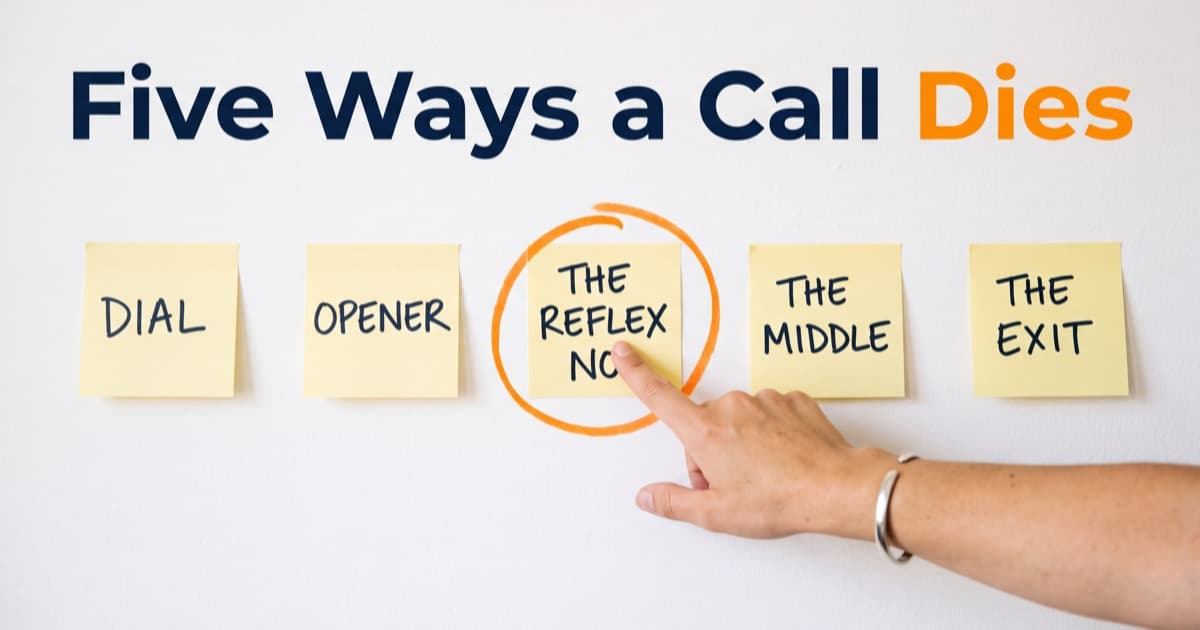
Treating a good hour as permanent. Windows move with quarter ends, seasons, shift patterns and the buyer's own calendar habits. Re-run the band test when the list or territory changes, or twice a year, whichever comes first. The discipline the cold calling guide applies to the five moments where calls die applies here: the answer is empirical, and it goes stale.
Your next calling block
Take your next two hundred dials and split them across the four bands instead of pouring them into your usual hour. Log the prospect's local time, the sixty-second mark, and the next step. Do not change your opener while you do it.
Two weeks later you will hold something no article can hand you: a ranked list of hours for your list, your role and your product, with a reason attached to the top one. And on the dials that land badly anyway, and some always will, make the move Tadeo made on the second call. Name the bad timing, ask one question, let them pick the hour. That ten-second recovery is the difference between a wasted 4:50 and a booked 10:15. If the reluctance to dial at all is the bigger obstacle, that is a separate problem with a separate fix, covered in the fear of cold calling.