'You Are the Fourth Person to Call Me This Week': What to Say Next
"Let me guess. You saw we're buying the six Harbor Road sites." Isaura, the vice president of operations at Glossway Car Wash, did not wait for the rep to finish his name. "You're the fourth person to call me this week."
Here is the answer. When a prospect says you are the fourth person to call them this week, they are not refusing the call. They are telling you how they will judge it: against the three calls they already took. So do not pitch harder, and do not pretend you are different. Agree with the pattern out loud, name what the other callers almost certainly led with, and then say the one specific thing none of them said, about the business they already run, not the news everyone read. Then ask one question and stop. "Then you've heard plenty about the new sites. I'm calling about the 9,400 members you already have" buys more attention than any opener you rehearsed.
Caller number four, and why the buyer is counting
This line almost always follows a public trigger. A funding round, an acquisition, a new executive, a hiring spree or an award puts one company in front of every sales team that watches the news, and every one of them books the same call the same week. The buyer is not exaggerating. By Thursday they have heard the same congratulations, the same "quick question" and the same request for fifteen minutes three times.
Other versions of the same line:
- "I've had five of you this week."
- "Everyone's calling since the announcement."
- "Is this about the funding? Because I've already said no twice."
- "You all must buy the same list."
The buyer has not said no yet. They have told you the bar, and it is low and specific: do not be the fourth copy of a call they already declined. If you want the wider map of cold-call refusals and which ones are real, the brush-off vs objection guide sorts them. This page is about the crowded week.
Sounding like the first three: how reps lose call four
Four reflexes end this call, and each one feels reasonable in the moment.
Leading with the trigger anyway. "Congrats on the acquisition, that's exciting." It was exciting on Monday. On Thursday it is proof you read the same press release as everyone else.
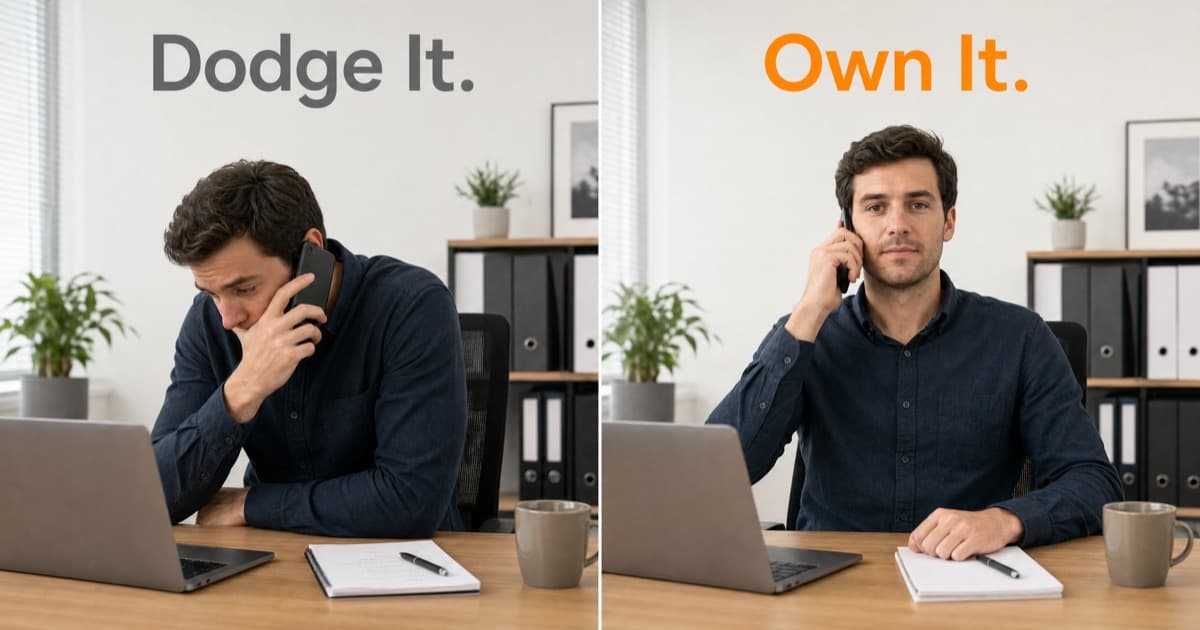
Claiming to be different. "I promise I'm not like the others." Every one of the others said that too. A claim of difference is the most generic sentence available.
Apologizing your way out. "Sorry, I'll let you go." The buyer handed you a test and you forfeited it. You also taught them that one sentence is enough to end your calls.
Asking for the meeting immediately. "Could we grab fifteen minutes next week?" That was the exact request from callers one, two and three, and it got three no answers.
All four make the same mistake. They treat the line as a feeling to soothe instead of a comparison to win.
What is the buyer comparing you against on the fourth call?
The other three calls set a template in the buyer's head. Your job is to break it in the first two sentences. Here is the template, and what breaks it.
| What callers one to three said | What the buyer heard | What caller four says instead |
|---|---|---|
| "Saw you're adding six sites. Congrats!" | You read the same news. So did everyone. | "You've heard plenty about the new sites. I'm calling about the ones you already run." |
| "Just a quick question." | A pitch is coming, and it will not be quick. | One number about their business, then one real question. |
| "Do you have two minutes?" | You want my time before you have earned it. | "If this misses, tell me and I'll hang up." |
| "Can we get fifteen minutes on the calendar?" | The same meeting the first three asked for. | A smaller ask: one fact they can check without you. |
The pattern in the right-hand column is specificity plus an easy exit. A buyer who is tired of the category relaxes when the call sounds short and checkable. If you open well under pressure already, the cold call opening lines page has more first sentences that do not sound like everyone else's.
Ewart, Isaura and the 9,400 members at Glossway
Glossway Car Wash runs 14 express washes and has just agreed to buy six more. Most of its revenue comes from unlimited-wash memberships: 9,400 members at $29.99 a month. Ewart sells for Vantle, which recovers membership payments when a card is declined. A typical membership wash loses about 4 percent of members a month to failed cards that nobody chases, which at Glossway would be around 376 members, or roughly $11,300 a month. It is Thursday afternoon.
The fourth copy:
Isaura: Let me guess. You saw we're buying the six Harbor Road sites. You're the fourth person to call me this week.
Ewart: Ha, I bet! Congratulations, by the way, that's a big move. I promise I'm not like the others, I just had a quick question.
Isaura: That's what the last one said.
Ewart: Totally fair. We help growing wash chains with their payments. Could we grab fifteen minutes next week to walk through it?
Isaura: Send me something. I'm not booking anything this week.
Ewart said the three lines Isaura had already heard, in the same order, then asked for the same meeting. Her "send me something" is not interest. It is the polite version of the answer she gave the first three, and an email will join theirs.
The first different call:
Isaura: Let me guess. You saw we're buying the six Harbor Road sites. You're the fourth person to call me this week.
Ewart: Then you've heard plenty about the new sites, and I won't add to it. I'm calling about the 9,400 members you already have.
Isaura: Okay. What about them?
Ewart: Membership washes your size usually lose about 4 percent a month to declined cards that nobody follows up on. For you that would be around 376 members a month. Do you know your real number?
Isaura: No. The site managers see a decline and the member just stops showing up.
Ewart: That's what most chains tell me. If it is anywhere near 4 percent, it's about $11,300 a month, before the six new sites add their members. If I'm wrong, you can tell me in one report and I'll stop calling.
Isaura: Which report?
Ewart: Your point-of-sale system can export failed membership charges for last month. If you pull it and the number's small, we're done. If it isn't, give me twenty minutes after you've seen it. Is Tuesday reasonable for the export?
Isaura: I'll have my finance lead pull it Monday. Call me Tuesday at nine.
Ewart agreed with the pattern instead of fighting it, which costs nothing and proves he was listening. He then moved the subject from the news to the business Isaura already runs, which the other three callers never touched. The number was specific enough to be checked and modest enough to be believed, and he offered a clean way out if it was wrong. Notice what he did not do: he never claimed to be different. He just was, and his ask was a report she controls rather than a meeting she had already refused three times.
Be the call that sounds nothing like the last three.
ConvoSparr lets you practice this moment out loud against an AI buyer who tells you you're the fourth caller this week, cuts you off if you lead with the news, and then scores whether your first two sentences broke the pattern.
Practicing the fourth-call reply out loud
The reply has to come out calm, inside the first breath after the buyer finishes. That only happens if you have said it before. Before your next trigger-driven call list, write and rehearse three lines:
- The agreement. One sentence that accepts the pattern without apology: "Then you've heard plenty about the new sites."
- The pivot. One sentence about the business they already run, with a number in it. Not the news. The thing that was true before the news.
- The exit. One sentence that makes it easy to say no: "If this misses, tell me and I'll hang up."
Say all three out loud, back to back, until they take under fifteen seconds. Then practice them against a buyer who interrupts after the first one, because on a real Thursday afternoon, Isaura will.
Updated Nov 14, 2026
Run this scenario for real
ConvoSparr drops you into a live voice call with an AI buyer who runs this exact play. Handle it out loud, then get a transcript, scores, and coaching notes on how you did.
Free to start. No credit card required.