'Can We Start With a Pilot?' Handling the Objection So Day 60 Ends in a Decision
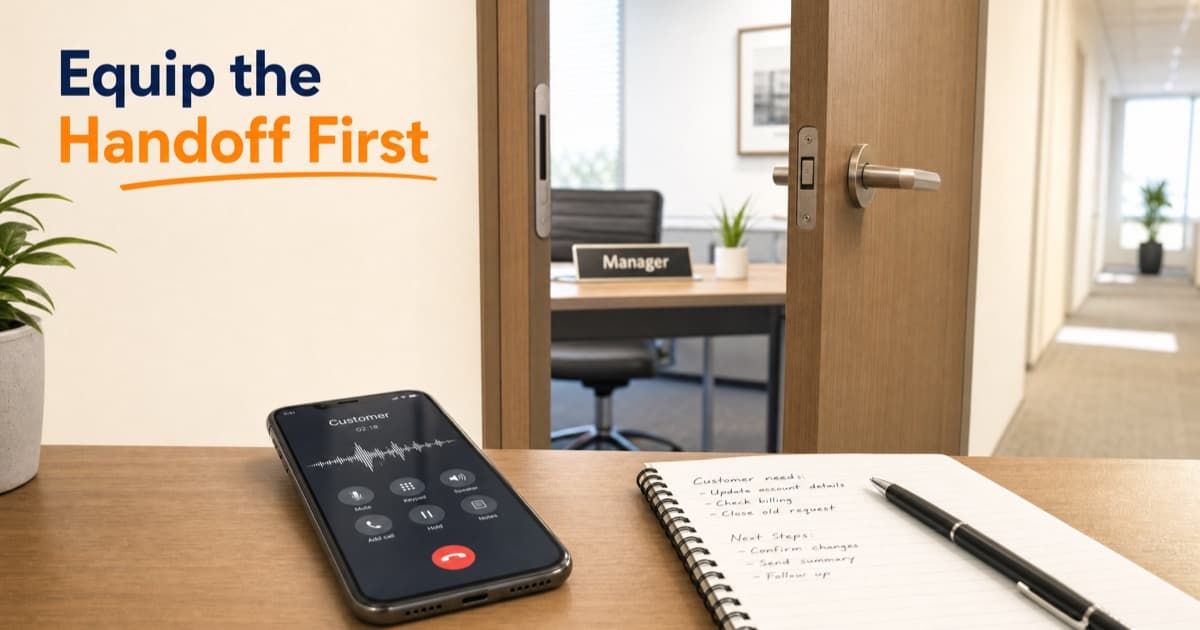
A pilot is not a smaller sale. It is a test, and a test without a pass mark is a free trial with a longer name. When a buyer says "can we start with a pilot?", say yes to the idea and no to the open end: before you agree to scope, length or price, get the buyer to name what has to be true on the last day for them to sign, who will be in the room when they check, and what happens the morning after. A pilot built that way ends in a decision. A pilot built any other way ends in a request for another month.
Pilot Requests Arrive Right After a Good Demo
The timing is the tell. Nobody asks to pilot a product they have already ruled out. The request lands when the demo went well, the buyer can picture the tool working, and they have just remembered that somebody above them will ask why they were so sure.
It tends to come in three shapes:
- The scoped ask. "Could we try it in two buildings first?" They have already picked the test site.
- The budget ask. "We could do a pilot this quarter and a full rollout in the new year." The pilot is a way to spend nothing until the money exists.
- The cover ask. "My VP would feel better if we piloted it." The pilot is not for the buyer at all. It is evidence for somebody who was not on the demo.
Each one is a reasonable request. None of them is a stall on its own. They become a stall when the seller agrees to the shape and skips the ending.
Why a Fast Yes Turns Into Sixty Days of Free Work
The reflex is relief. The buyer did not say no, so the rep says "absolutely" and starts talking about setup. Three things go wrong from there.
First, the pilot has no finish line, so nobody owns the moment it is supposed to end. Day 60 passes, the champion is busy, and the tool is now quietly in use for free. Second, the people who will make the call never see the pilot, because nobody invited them to the readout. Third, success is never defined, so the buyer judges it on feel, and feel is whatever the loudest user in building two says in the hallway.
The buyer usually means one of three things by "pilot", and only one of them is worth agreeing to as asked:
| What they call it | Who sets the end date | What gets measured | What happens on the last day |
|---|---|---|---|
| Free trial | Nobody, or an automatic expiry | Whether the users liked it | An email asking if they want to continue |
| Open pilot | The buyer, loosely | Whatever the buyer remembers to check | A meeting to discuss next steps, which is usually another pilot |
| Scoped pilot | Both sides, in writing, before kickoff | Two or three numbers the buyer already tracks today | A readout with the decision maker and a contract that starts the next day if the numbers land |
Your job on the call is to turn the first two into the third without making the buyer feel managed.
What Does a Pilot Protect the Buyer From?
Being wrong in public. The buyer is not asking for a pilot because they doubt your product in some abstract way. They are asking because they will have to stand behind the choice, and a pilot lets them say "we tested it first" if anyone asks. That makes the pilot a piece of internal evidence, and evidence only works if it was defined before anyone saw the result.
So the question that changes the call is not "how long do you need?" It is "what would you need to see to recommend this to the whole portfolio?" A buyer who can answer that has told you their real objection. A buyer who cannot answer it has told you something more important: they do not yet know what problem the pilot is solving, and sixty days of free usage will not tell them.
Tamberlane Wants Two Buildings for Sixty Days
Tamberlane Residential manages fourteen apartment buildings, about 2,100 units, with maintenance requests still logged by phone and a shared inbox. Ottilie, Director of Resident Services, has just watched a demo of Keelwork, a work-order platform for property managers. The annual quote for all fourteen buildings is $64,000. Leif is the rep.
Leif agrees to everything:
Ottilie: This looks good. Can we start with a pilot? Maybe two buildings for sixty days.
Leif: Absolutely, that is a great way to start. Which two buildings were you thinking?
Ottilie: Probably Brightwater Court and the Linden Street one. They get the most complaints.
Leif: Perfect. I will get the onboarding team to set those up next week, and we can check in at the end and see how it went.
Ottilie: Great. I will let my VP know we are trying it.
Every line was friendly and every line gave something away. "Check in at the end and see how it went" is the open pilot from the table: no date, no measure, no decision maker. "I will let my VP know" means the VP hears about it secondhand and judges it later on a summary. And by not asking why those two buildings, Leif missed that Ottilie picked the worst ones, which is a fine test only if everyone agrees in advance what improvement counts.
Leif asks what day 60 decides:
Ottilie: This looks good. Can we start with a pilot? Maybe two buildings for sixty days.
Leif: Yes, I think a pilot makes sense for a rollout this size. Before we pick dates, can I ask one thing? On day sixty, what would you need to see to recommend this for all fourteen buildings?
Ottilie: Honestly, fewer complaints about repairs taking forever.
Leif: Do you track how long a repair takes today, from the call to the job being closed?
Ottilie: Roughly. It is about six days on average. Emergencies after hours are the bigger problem. Sometimes nobody picks those up until morning.
Leif: Then those are the two numbers. Say average close time under three days in the pilot buildings, and every after-hours emergency acknowledged within thirty minutes. Does that sound like a pass to you?
Ottilie: If we hit both of those, yes. I would be surprised, but yes.
Leif: Who else needs to believe it? You mentioned your VP.
Ottilie: She signs anything over fifty thousand.
Leif: Then can we put a readout on her calendar now, for the week of day sixty, so she sees the numbers from you rather than from a forwarded email? And if both numbers land, we agree today that the fourteen-building agreement starts the following Monday at the price we discussed.
Ottilie: I can ask her. She will want to know what happens if they do not land.
Leif: Then you walk away with the data and owe us nothing. That is the point of writing it down first.
Three moves did the work. Asking what day 60 would need to show, before talking about setup, made Ottilie define the test herself, so the criteria are hers to defend. Pinning the criteria to numbers she already tracks meant nobody has to build a new report to judge the result. And putting the VP's readout on the calendar during the call moved the real decision maker inside the pilot instead of downstream of it. Leif never argued against the pilot. He made it count.
The pilot ask comes right after your best moment.
It lands when the demo has gone well and you most want to say yes. ConvoSparr lets you practice that call out loud against an AI buyer who asks for a pilot, dodges the pass-mark question and pushes for open-ended terms, then scores whether you defined the ending or just agreed to start.
Drill the Pass-Mark Question Before Your Next Pilot Ask
The hard part is not knowing what to ask. It is asking it in the half second after the buyer has said something hopeful, when every instinct says to take the win. Rehearse the sequence until it comes out without a pause:
- Agree to the idea of a pilot in one sentence, without agreeing to any terms.
- Ask what the buyer would need to see on the last day to recommend the full rollout.
- Turn the answer into two or three numbers they already track.
- Ask who else has to believe the result, and get that person's readout booked now.
- Agree what happens the day after a pass, including the start date and the price.
- Say plainly that a failed pilot costs them nothing, so the criteria feel safe to commit to.
Run it against a buyer who answers vaguely ("we will just see how the team likes it") and practice narrowing that into a number. It is the answer you will hear most.
Then take the challenge onto your next real call. The next time a buyer asks to start with a pilot, do not say "absolutely" until they have told you what day 60 decides. If they cannot tell you, you have learned more in that silence than sixty free days would have taught either of you.
Updated Oct 1, 2026
Run this scenario for real
ConvoSparr drops you into a live voice call with an AI buyer who runs this exact play. Handle it out loud, then get a transcript, scores, and coaching notes on how you did.
Free to start. No credit card required.