The One-Sentence Answer When a Prospect Asks 'How Did You Get My Number?' on a Cold Call
"How did you get my number?" sounds like a privacy complaint, and that is the trap. It is mostly a credibility check. When a prospect asks how you got their number on a cold call, they are deciding in the next five seconds whether you are a person with a reason or a dialer working down a list. So answer it straight, in one true sentence: name the real source, say the specific reason you chose them, and offer an easy way out. "Your mobile is listed in a business contact database we license. I called you because you opened a second greenhouse in March. If that's the wrong reason, say so and I'll take you off our list." That answer takes about eight seconds, and it usually earns the next twenty.
Why do prospects ask how you got their number?
The question shows up most when you reach someone on a number they think of as private: a mobile, a direct line that skips the front desk, or a cell phone listed on a website years ago and forgotten. It also shows up when the call feels too targeted. If you open with something specific about their business, a fair share of buyers will wonder how a stranger knows it.
It comes in a few shapes:
- "How did you get this number?"
- "Who gave you my cell?"
- "Where are you calling from, and how do you have this line?"
- "Did someone sell you my details?"
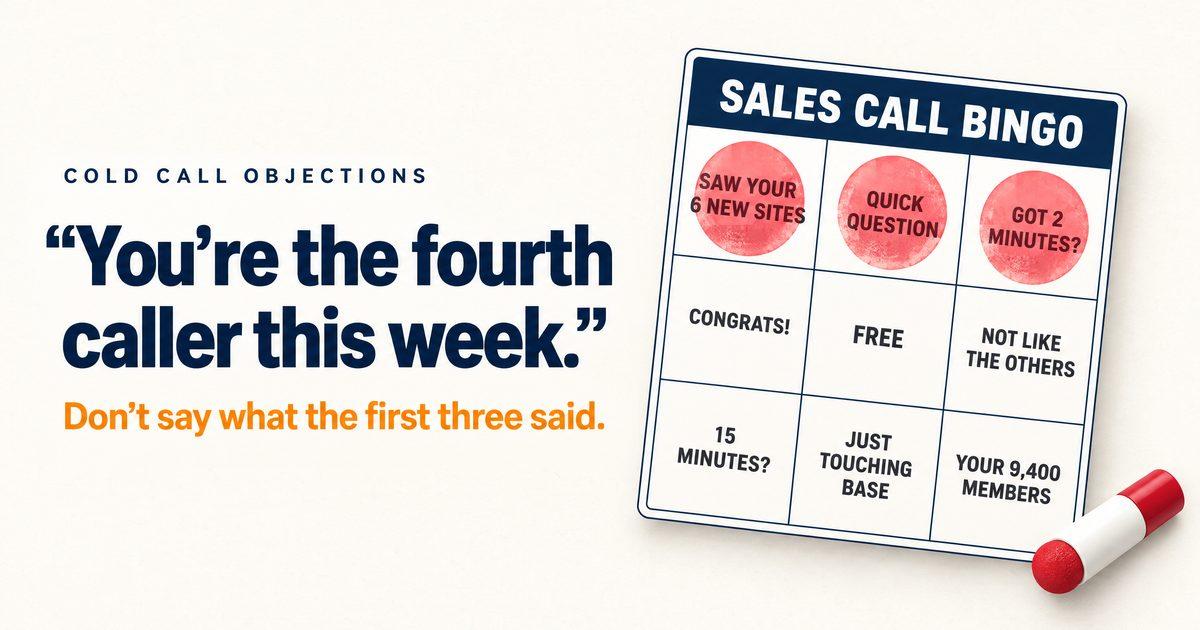
Underneath every version is the same moment. The buyer has picked up, has not hung up yet, and is giving you one chance to sound like a legitimate business. That is a better position than "not interested." If you want the map of which cold-call refusals are real and which are reflexes, the cold calling guide walks through all five moments where calls die. This page is about the one where the buyer asks you to show your work.
Dodging, oversharing and the apology reflex
Reps lose this moment in four predictable ways, and every one of them feels polite at the time.
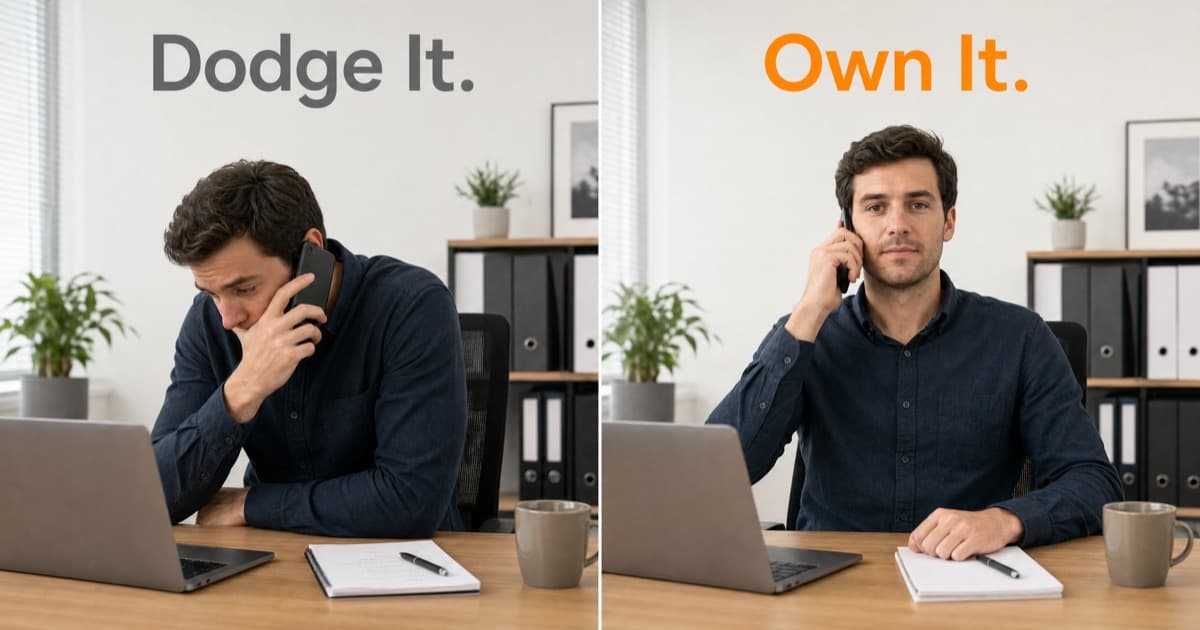
The dodge. "Oh, we work with a lot of companies in your area." The buyer asked a direct question and got a vague one back. Vague is exactly what a spam caller sounds like, so the buyer concludes you are one.
The lie by blur. "You must have signed up for something on our site." If they did not, they know it immediately, and now you have been caught in the first fifteen seconds. Nothing you say after that is believed.
The overshare. A forty-second explanation of data vendors, opt-in rules and how prospecting works. The buyer wanted one sentence. A long answer sounds defensive, and it spends the time you needed for the reason you called.
The apology. "I'm so sorry, I'll let you go." You have just agreed that calling them was wrong. Most buyers who ask this question were not angry. They were curious, and you taught them the call was not worth finishing.
All four treat the question as an accusation. It is a test, and it has a short right answer.
Source, reason and exit: what the buyer is checking
The buyer is running three quick checks, usually without noticing. Each check has a matching sentence, and the order matters.
| What the buyer is checking | What fails the check | The sentence that passes it |
|---|---|---|
| Are you honest about the source? | "We work with lots of businesses like yours." | "It's listed in a business contact database we license." |
| Did you pick me, or am I row 400? | "We're reaching out to nurseries in the region." | "I called you because you opened a second greenhouse in March." |
| Can I get rid of you easily? | Ignoring the question and pitching faster. | "If that's the wrong reason, say so and I'll take you off our list." |
The source sentence must be true and specific enough to check. Name the kind of source (a database your company licenses, a trade association directory, a referral from a named person, their own website), not a brand you are hoping they recognize. If a colleague referred you, use the name only if that person agreed to it.
The reason sentence is where the call is won. A source on its own still sounds like a list. A source plus a reason that only fits this buyer sounds like research. This is the same principle that separates a warm call from a cold call: what makes a call feel warm is whether the buyer knows why you picked them.
The exit sentence lowers the stakes. A buyer who knows they can end the call with one word is far more likely to let it continue. And if they do ask to be removed, remove them, the same day, and tell them you have. That is basic respect, and in many places it is also the law.
Dashiell and Romilly at Okewood Nursery
Okewood Nursery is a wholesale plant nursery that grows perennials and shrubs for garden centers. In March it opened a second growing site, mentioned in its regional growers' association newsletter. Romilly runs operations across both sites. Dashiell sells for Varrow, which puts soil moisture sensors on greenhouse benches and texts the grower when an irrigation zone stops watering. Romilly's mobile came from a business contact database Varrow licenses. It is a Tuesday morning, and she picks up on the third ring.
First call, the slippery version:
Romilly: Romilly speaking.
Dashiell: Hi Romilly, Dashiell from Varrow. We help nurseries keep their irrigation on track. Have you got a quick minute?
Romilly: Hang on. How did you get my number? This is my cell.
Dashiell: Oh, we work with a lot of growers in your area, so your name came up. Anyway, the reason I'm calling is...
Romilly: Came up where?
Dashiell: Just through our network. Honestly, it's nothing to worry about.
Romilly: Then take me off whatever network that is. Bye.
"Came up" and "our network" are the language of a caller hiding something, so Romilly assumed he was. Notice that her second question was a second chance: she asked again because she wanted a straight answer and would have taken one. Dashiell answered it with the same fog, and "nothing to worry about" told her there was something to worry about.
Second call, the straight version:
Romilly: Romilly speaking.
Dashiell: Hi Romilly, Dashiell from Varrow. I'll be quick.
Romilly: Hang on. How did you get my number? This is my cell.
Dashiell: Fair question. It's listed in a business contact database we license. I called you, and not the front office, because you opened the second greenhouse in March and you run both sites. If that's the wrong reason, tell me and I'll take this number off our list today.
Romilly: Huh. Okay. What's the reason, then?
Dashiell: When a nursery adds a second site, the usual thing that bites is a zone that stops watering on a weekend when nobody is walking that house. One stuck valve on a Saturday can cost a full bench of plugs before Monday. Has that happened to you since March?
Romilly: Once. We lost about 1,500 hellebore plugs in June. Nobody noticed until Monday.
Dashiell: That's exactly the case we're built for. Would it be worth fifteen minutes on Thursday to see whether a sensor on each zone would have caught it?
Romilly: Thursday after two. And send me the name of that database. I want to check what else it has on me.
Dashiell: I'll put it in the invite.
Dashiell started with "Fair question," which treats the question as reasonable instead of hostile. His answer had all three parts in about eight seconds: a checkable source, a reason that could only apply to Romilly, and an exit with a deadline on it ("today"). Then he stopped talking and let her choose. Her follow-up about the database is a good sign, not a bad one. A buyer who wants to verify your answer believes it might be true. Giving her the name in writing closes the loop and makes the meeting feel safe.
Rehearse the answer before a prospect asks for it.
ConvoSparr lets you practice this moment out loud against an AI buyer who stops you mid-opener to ask how you got their number, pushes back if your answer sounds vague, and then scores the call so you can see whether you named a source, a reason and an exit.
Loop the first fifteen seconds until the answer is automatic
You will not get to think when this question lands. It arrives in the first breath of the call, in a tone that sounds sharper than it is, and the instinct is to soften or flee. So before your next calling block, write your three sentences for the list you are about to call:
- The source, in plain words: where this list came from, true and checkable.
- The reason, one fact about this buyer that is not true of everyone on the list.
- The exit, with a promise you will actually keep.
Then say them out loud, back to back, until they take under ten seconds and sound like a normal person talking. Run them against a buyer who asks twice, because the second ask is where reps who had a scripted first answer fall back into fog.
One warning before you dial. If you cannot write a true source sentence for a list, or the honest version would make the buyer uncomfortable, the problem is not your phrasing. It is the list. Fix that before you make the call, because no wording rescues a number you should not have.
Updated Nov 16, 2026
Run this scenario for real
ConvoSparr drops you into a live voice call with an AI buyer who runs this exact play. Handle it out loud, then get a transcript, scores, and coaching notes on how you did.
Free to start. No credit card required.