'You Said Saturdays Twice': Active Listening in Sales Calls Buyers Can Hear
Active listening in sales calls only counts if the buyer can hear it. So what should your next sentence say to prove you caught the word they repeated?
Most advice about active listening was written for a room. Make eye contact. Nod. Lean in. Keep your arms uncrossed. Almost none of it survives a sales call, because the buyer on a phone line cannot see you nod, and on video they are looking at their own slides. What the buyer hears is a voice saying "mm-hmm" and then, a beat later, whatever you decided to say next.
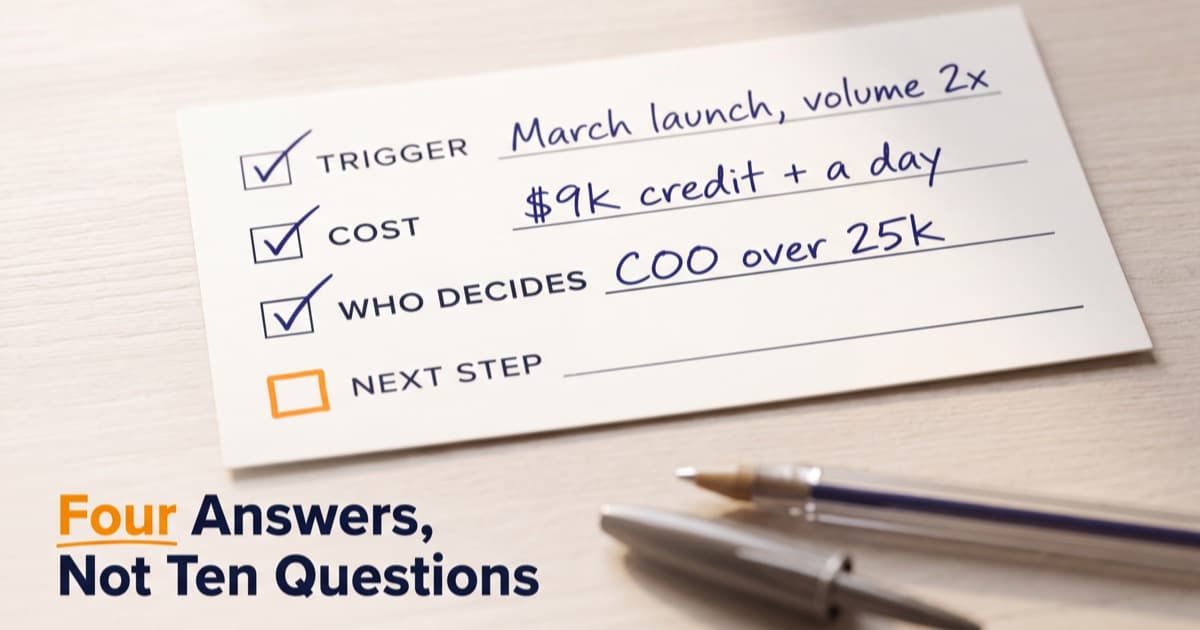
That second part is the whole game. Active listening in sales calls is not something you do while the buyer talks; it is something you prove with the sentence after they stop. You prove it four ways: you reuse their exact words instead of your category words, you follow the hedge (the "mostly," the "a bit," the thing said twice), you summarize with a gap they can fill, and you leave a pause long enough for them to add the part they had not planned to say. If your next question could have been written before the call started, the buyer has no evidence you listened, however carefully you did.
Why can't a buyer hear you nodding?
Because a call strips out every signal except sound and timing. In a room, a buyer watches your face while they speak and adjusts: they elaborate when you look interested and wrap up when you look lost. On a call that feedback loop is gone, so buyers fall back on the only test left. They say something slightly important and wait to see whether it comes back.
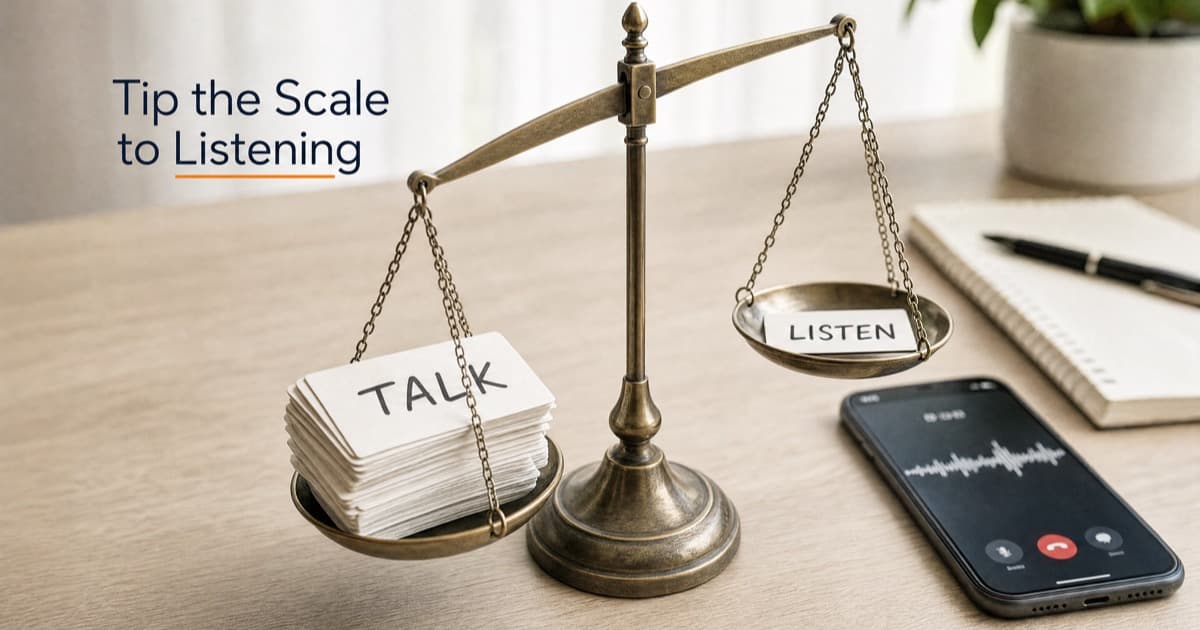
It usually does not. The rep says "I hear you," which is a claim, not evidence, and asks the next question on their list. The buyer notices, not consciously, but their answers get shorter, and by minute fifteen they are answering questions instead of telling you things. The talk-listen ratio tells you how much air you left. Listening is what you did with it.
The test for your own recordings: pick any question you asked after minute five. If you could move it anywhere in the call without changing a word, it was a list question, and a call made of list questions sounds like a survey.
Five ways listening shows up in your next sentence
| Signal | What it sounds like | What it proves to the buyer | When it backfires |
|---|---|---|---|
| Their word, not yours | "You said the team copes. What does coping look like?" | You kept their framing instead of translating it into your pitch | Every sentence starts with "you said," and it starts to sound like a deposition |
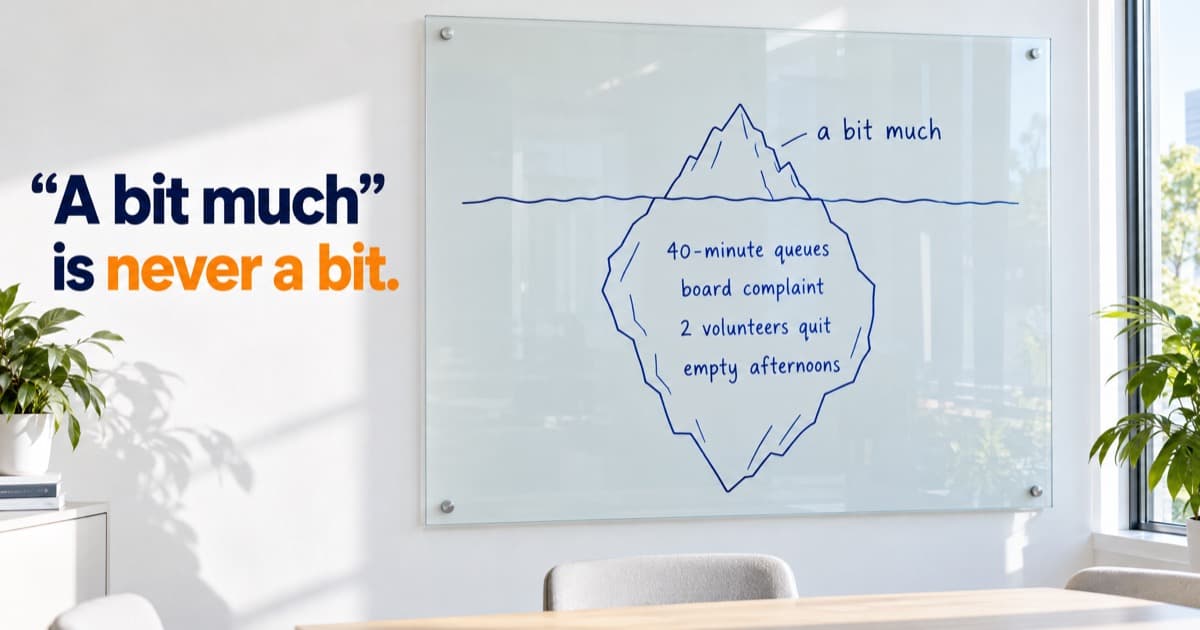
| The hedge follow-up | "You said a bit much. How much is a bit?" | You heard the part they softened, which is usually the real problem | You push on a hedge that was genuinely minor and they have to talk it up to be polite |
| The gap summary | "Let me check I have this. ... What did I miss?" | You held the whole picture, and you want the piece you do not have yet | You summarize at minute three, before there is anything to summarize |
| The earned second question | A question that only makes sense after their last answer | The call is following them, not your agenda | You chase every thread and never get back to the one that matters |
| The held pause | Three seconds of nothing after a heavy answer | You are not waiting for your turn, you are waiting for the rest | You hold silence after a short factual answer and it reads as a dropped line |
The last column matters most. Every one of these moves becomes a tic when it runs on schedule instead of in response, and buyers hear tics fast.
Reading about it only gets you halfway.
Run this exact conversation out loud against a realistic AI buyer on ConvoSparr and get a scored review of how you handled it.
Twenty minutes with the Wexcombe Museum of Art
Thiago sells Lanternly, a timed-entry ticketing and visitor flow platform. Isadora is director of visitor services at the Wexcombe Museum of Art, a mid-sized museum that sees around three hundred thousand visitors a year. This is the opening stretch of a discovery call, run twice.
First pass: listening for an opening to pitch.
Thiago: So walk me through how ticketing works for you today.
Isadora: We sell timed tickets online through the module that came with our membership database. Honestly, it's fine for most of the week. Saturdays get a bit much, but the team copes.
Thiago: Totally, I hear you. A lot of the museums we work with were in the same spot. What's your annual attendance roughly?
Isadora: Around three hundred thousand.
Thiago: Great. And memberships run through the same system?
Isadora: Yes.
Thiago: Perfect, because Lanternly integrates with most membership databases, so we could pull your member list straight in and...
Isadora: Saturdays are really the only time it's a problem. The rest of the week is fine.
Thiago: Makes sense. So on the integration side, which database are you on?
Isadora: I'd have to check with IT.
Nothing Thiago said was rude. But look at what Isadora got back. "I hear you" claimed attention without showing any. The attendance and membership questions were written before the call and would have been asked whatever she said. Then she raised Saturdays a second time, unprompted, interrupting a pitch to do it. That is a buyer handing you the call. Thiago stepped over it to ask about databases, and "I'd have to check with IT" is what a buyer says when they have decided this is a technical evaluation, not a conversation about their problem.
Second pass: listening for the word she said twice.
Thiago: So walk me through how ticketing works for you today.
Isadora: We sell timed tickets online through the module that came with our membership database. Honestly, it's fine for most of the week. Saturdays get a bit much, but the team copes.
Thiago: The team copes on Saturdays. What does coping look like at, say, eleven in the morning?
Isadora: A line out the door, honestly. The morning slots sell out online by Thursday, and everyone who didn't book is standing in the courtyard while Bashir, our front-of-house manager, tries to find them a time on a handheld.
Thiago: You said "a bit much." Is it a bit?
Isadora: It's more than a bit. Last spring a member waited forty minutes and wrote to the board about it. That's the email I still think about.
(Thiago says nothing for about three seconds.)
Isadora: And the frustrating part is the afternoon slots sit half empty. We have the capacity. We just can't move anyone into it.
Thiago: Let me check I have this. Mornings sell out by Thursday, walk-ups queue in the courtyard, afternoons run half empty, and the cost that stays with you is a member complaint that reached the board. What did I miss?
Isadora: The volunteers. Saturday is when most of them work, and two quit last year. They said they were tired of being shouted at in the courtyard.
Thiago: So it's members, volunteers, and capacity you already have but can't use. Who else feels Saturdays the way you do?
Isadora: Leopold, our deputy director. He took the call from the board. He'd want to be on the next conversation.
Line by line: "The team copes on Saturdays" is her word, not his, and it tells her he heard the part she buried in a subordinate clause. "Is it a bit?" is the hedge follow-up, and it is the question that turned a mild complaint into a board-level email. The three seconds of silence did more than any question in either pass: Isadora filled it with the half-empty afternoons, which is the single most useful fact on the call for someone selling visitor flow, and Thiago never had to ask for it.
The gap summary showed her the picture held together, and "What did I miss?" got the volunteers, a cost no list would have found. The last question only makes sense after everything before it, and it produced the name of the person who carries the problem upward. Same buyer, same opening answer, and the second pass ends with a next meeting that has a deputy director on it. And he never mentioned Lanternly once, which is why the discovery call guide keeps listening and pitching in separate halves of the call.
Is mirroring the same as active listening?
No. Mirroring, repeating the last two or three words a buyer said as a question, is one technique inside active listening, and it is the one most likely to be overused. It works when an answer stops short: the buyer says "it's mostly about the timing," you say "the timing?", and they keep going. Three mirrors in a row sound like an echo, and a buyer who hears an echo starts choosing their words carefully.
The difference is selection. Mirroring repeats whatever came last. Active listening repeats whatever mattered most, which is often something said two answers ago. Isadora's "a bit much" was not the last thing she said. Going back for it is what made it feel like listening rather than technique.
Four habits that sound like listening and aren't
"I hear you" and its cousins. "Totally" and "makes sense" are fine as filler, but as the whole response they announce listening instead of showing it. Replace the phrase with the buyer's own word and the claim becomes evidence.
Summarizing on a timer. A summary with nothing new in it is a recap, and buyers hear a recap as the rep catching up. Summarize when the picture has changed, and end on the gap.
Writing your next question while they talk. If you are composing the next line during the answer, you will ask it regardless of what the answer contained. Note the one word that surprised you and ask from that. The notes guide covers what earns a place on the page.
Empathy before facts. "That sounds really frustrating" lands well after the buyer has told you something frustrating. Said in response to "Saturdays get a bit much," it is a guess, and a buyer who was being mild now has to either agree with your exaggeration or correct it.
What did your last buyer say twice?
Open the recording of your most recent discovery call and search the transcript for any phrase the buyer used more than once. There is almost always one, and it is almost always the thing they most wanted you to ask about. Then look at what you said right after the second time. Was it a question about their word, or the next one on your list?
Practice this out loud
Run this conversation against a live AI buyer and get a scored review.
Start free, no cardPractice this callPractice this before it counts
ConvoSparr puts you in a live voice call with an AI buyer who pushes back like a real one. Every session ends with a transcript, scores, and coaching notes.
Free to start. No credit card required.
Keep reading
All articles