How to Book a Meeting From a Cold Call, and Keep It on the Calendar
How to book a meeting from a cold call: the reason, the time you name, the confirm before you hang up. Which of the three are you skipping?
How many of the meetings you booked last month happened? Not how many went into a calendar. How many the buyer showed up for, at the agreed time, having accepted the invite.
Most reps working a cold list land between half and two thirds, and the missing third is almost never a scheduling failure. It is set in the last ninety seconds of the call that created the meeting, in the gap between a buyer who agreed to a time and one who agreed to a reason at a time. The first costs nothing to drop on a busy Thursday.
So here is the answer before the detail. To book a meeting from a cold call, do three things before you hang up: state the reason the meeting exists in the buyer's own words, propose one specific time yourself instead of asking what their week looks like, and get the buyer to say the time and the reason out loud. Reps who do all three often book fewer meetings and hold nearly all of them. The two habits that cost the most are asking for availability, which moves the booking into email where it dies quietly, and treating the word yes as the end of the call.
An ask has a shape, and most reps say only half of it
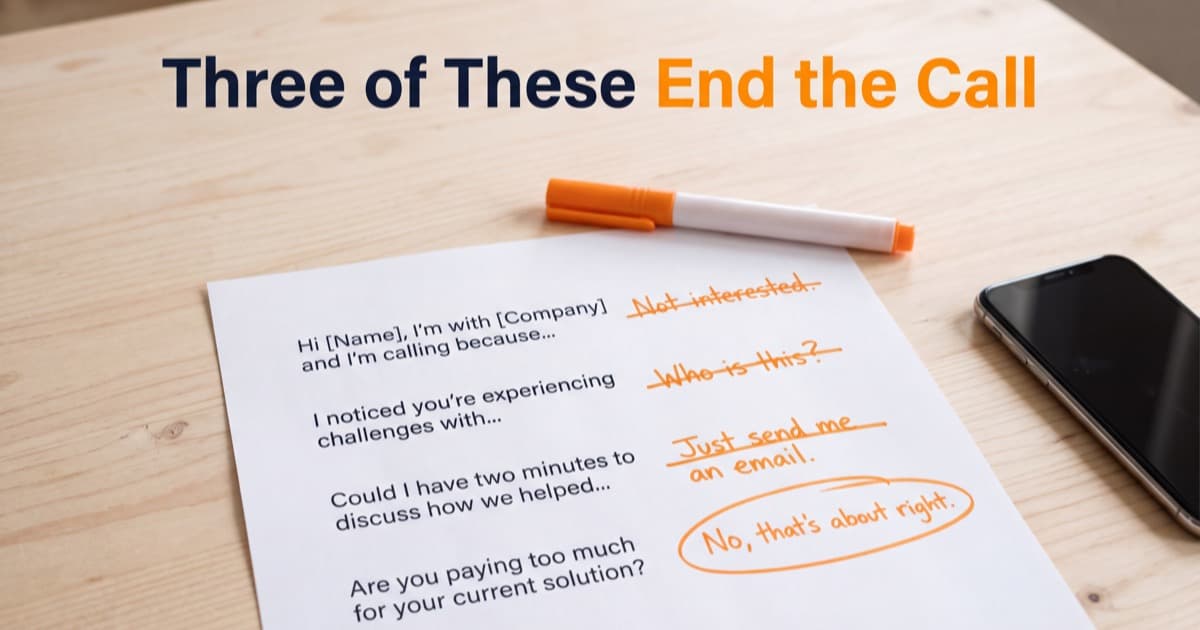
The ask most reps make is one sentence long. "Would it make sense to grab twenty minutes on the calendar?" It is polite, vague, and invites a judgment rather than a slot. The cheapest honest reply is "maybe, send me something," because agreeing to the idea of a meeting requires no decision about their week. A complete ask has three parts and takes fifteen seconds to say.
The reason, in their language. Not what you sell. The specific thing they just told you, repeated closely enough that they recognize it. "You said you turned down two matters in March because you could not staff a review team inside a week." A meeting with a reason attached defends itself when the buyer's Thursday fills up. One labeled "intro call" cannot.
The scope, so the length is believable. Say what happens in the time and what does not. "Twenty minutes, and I would show you two of them rather than all of it." A buyer who cannot picture the twenty minutes assumes a demo with three people on it.
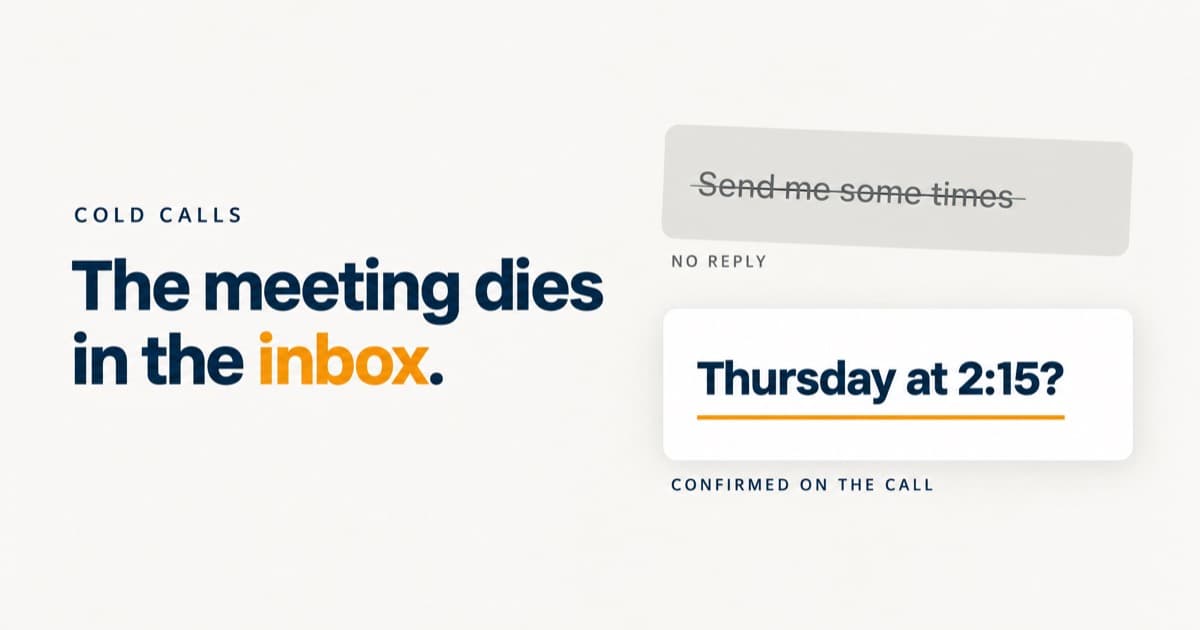
The time, named by you. One day, one hour, one minute value, then one fallback, then silence. The fallback converts a no into a second answer instead of an ending. Name nothing and you have handed the buyer unpaid scheduling work, which loses to everything else on the desk.
How specific should the time you propose be?
As specific as you can be without needing to see their calendar. Name a weekday, a clock time with an odd minute value, and a duration. "Thursday at 2:15 for twenty minutes" beats "sometime Thursday afternoon," and both beat "next week," because specificity does two things: it says you have a real slot rather than an empty week, and it makes the meeting a fixed object a person can accept or move rather than an intention that can dissolve.
The odd minute is information, not a trick. A 2:15 start with a 2:35 finish says the twenty minutes is literal. A 2:00 start says an hour is possible, and the buyer guards the hour.
One time also beats three. Three options read as a scheduling puzzle, and a puzzle gets postponed. Offer one, hold the fallback in reserve, and spend it only if the first is refused. If both fail for a real reason, you have learned more than a slot is worth, which is the logic behind asking for the close.
Reading about it only gets you halfway.
Run this exact conversation out loud against a realistic AI buyer on ConvoSparr and get a scored review of how you handled it.
Four ways to propose a time, and what each one costs
| How you ask | The buyer's cheapest reply | Where the booking ends up | What it costs you |
|---|---|---|---|
| Open availability: "What does your week look like?" | "Pretty full. Send me some times" | Your outbox, then their unread pile | The interest you spent four minutes building |
| The email handoff: "I'll send over a few options" | "Sure, do that" | An inbox with no reason attached | The reason. No email carries the sentence that made the meeting worth taking |
| Two options: "Tuesday at 10 or Thursday at 2?" | "Thursday, I think" | The calendar, softly | Little, but a held time with no reason and no second attendee drops first |
| One named time plus a fallback: "Thursday at 2:15, or Friday morning if Thursday is gone?" | "Thursday works" | The calendar, firmly, while you are on the phone | Nothing, if you confirm before you hang up |
Read the third row carefully, because it is where most decent reps live. Two options does book meetings, but without a stated purpose, which is why that no-show rate looks fine for a week and then sags. The buyer accepted a time when Tuesday was theoretical, and nothing in the invite argues for itself once Tuesday arrives full.
The close of a call at Penhallow Litigation Support
Nikhil sells for Benchfill, which staffs surge document review teams on short notice. Greta is director of review operations at Penhallow Litigation Support, a sixty-person firm. Four minutes into a cold call she has told him, unprompted, that they turned down two overflow matters in March because they could not staff a review team inside a week.
The version that ends on a maybe.
Nikhil: That's really helpful. I don't want to take more of your morning. Would it make sense to get some time on the calendar to walk you through how we handle that?
Greta: Maybe, yeah. What does that look like?
Nikhil: Half an hour, I'd show you the platform and we could talk through requirements.
Greta: Okay, send me some times. Things are a bit mad until the end of the month.
Nikhil: Perfect, I'll get those over today. Thanks Greta.
He had a live reason on the table and traded it for "some time on the calendar." The ask invited a judgment, so Greta gave him one, and "maybe" commits to nothing. The scope then grew into a platform walkthrough, which is a demo, and a demo requires her to have already decided. Then he took the availability handoff, moving a warm conversation into an inbox where it competes with a month that is a bit mad. She will not reply, and his pipeline note will say "interested."
The version that ends on a time.
Nikhil: Before I let you go, the March thing is the part I'd want twenty minutes on. Not a demo. Two ways other review teams get a surge team seated inside five days, and what it costs when they do. Thursday at 2:15, or Friday morning if Thursday is gone?
Greta: Thursday's bad, we have a filing. Friday, what time?
Nikhil: 9:30 works my end. Twenty minutes, and I'll finish on time.
Greta: Fine, 9:30 Friday.
Nikhil: Great. So Friday 9:30, twenty minutes, and the question we're answering is how you seat a surge review team in under five days without pulling your own people off billable work. Is that the right question?
Greta: That's the question. It's the one my managing partner keeps asking me.
Nikhil: Then should he be on it, or do you want to hear it first?
Greta: I'll hear it first.
Nikhil: Understood. The invite is going out while we're talking. And if Friday goes sideways, reply to it with a day and I'll move it, no chasing.
Greta: Got it. Thanks.
Same rep, same four minutes of discovery, same twenty minutes of her time. The difference is that Greta said the reason out loud in her own words, then improved it by naming who else is asking the question. She now has a meeting she can describe to somebody else, which is the real test of a booked one. "Not a demo" removed the thing she was preparing to refuse, and the invite went out during the call, the only moment her attention is guaranteed. Notice the refusal too: Thursday failed for a concrete reason, and the fallback turned it into a counter-offer from her side.
The confirmation nobody does while the buyer is still on the line
The confirm is three sentences, and it is what separates a booked meeting from a scheduled one. It goes after the yes, never before.
Say the whole thing back. Day, time, duration, and the question the meeting answers, then ask whether that is the right question. You are not checking details, you are getting the buyer to restate the purpose, because a purpose in their voice survives a busy week and yours does not.
Ask who else should be in it. One sentence, every time. Half the answers are nobody, and the other half hand you the person who decides, weeks early. That is what the committee buyer scenario exists to rehearse.
Send the invite before you hang up, and say you are doing it. Title it with the reason, not two company names. "Seating a surge review team in under 5 days" defends itself. "Benchfill and Penhallow, intro" gets declined by anyone triaging a full Friday.
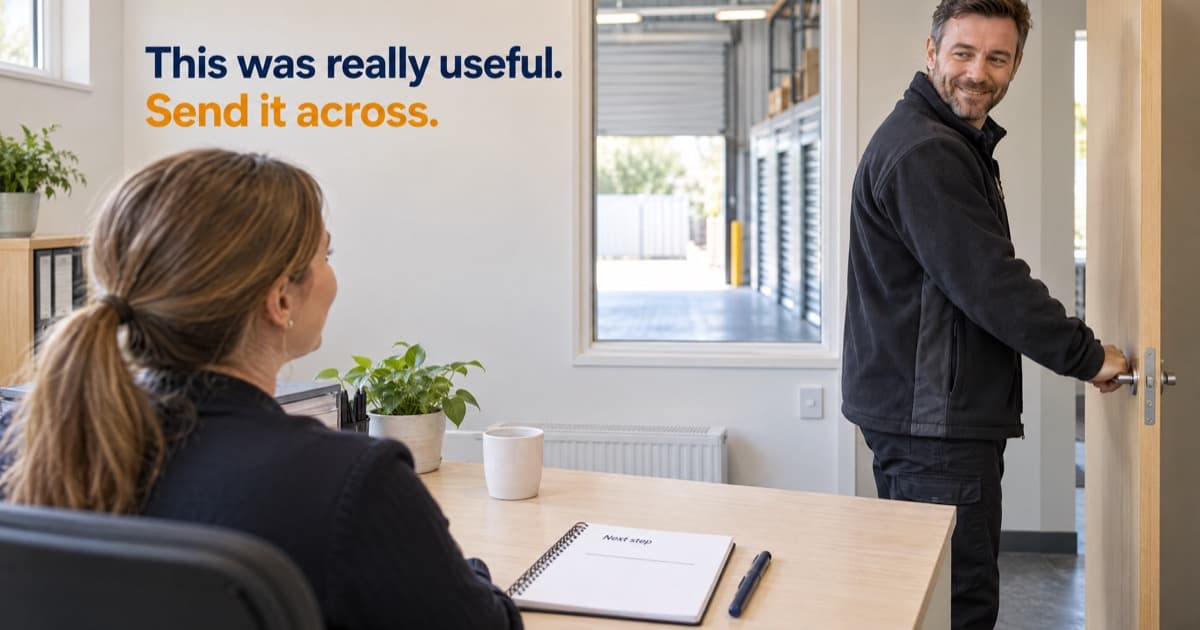
Give them a way to move it that is not a no-show. "If Friday goes sideways, reply to the invite with a day." Buyers no-show because canceling feels rude and rescheduling feels like work, and removing that friction turns most silent losses into a second date. Which slot you offer matters less than people think, though it helps to know when cold calls connect at all.
A checklist for the last thirty seconds
Run this from the moment you hear a reason worth twenty minutes.
- The reason, in their words. One sentence, quoting them, not your product.
- The scope, and what it is not. "Twenty minutes, not a demo."
- One time, with an odd minute value, plus one fallback, then silence.
- The confirm. Day, time, duration, question, and their answer to "is that the right question?"
- Who else. One sentence, asked every time.
- The invite, sent on the call, titled with the reason.
- The reschedule line. "Reply to the invite with a day."
None of it takes longer than the vague version. Reps skip it because the yes feels like the finish. That is the difference between a calendar of placeholders and a calendar of meetings: thirty seconds spent while the buyer is still listening.
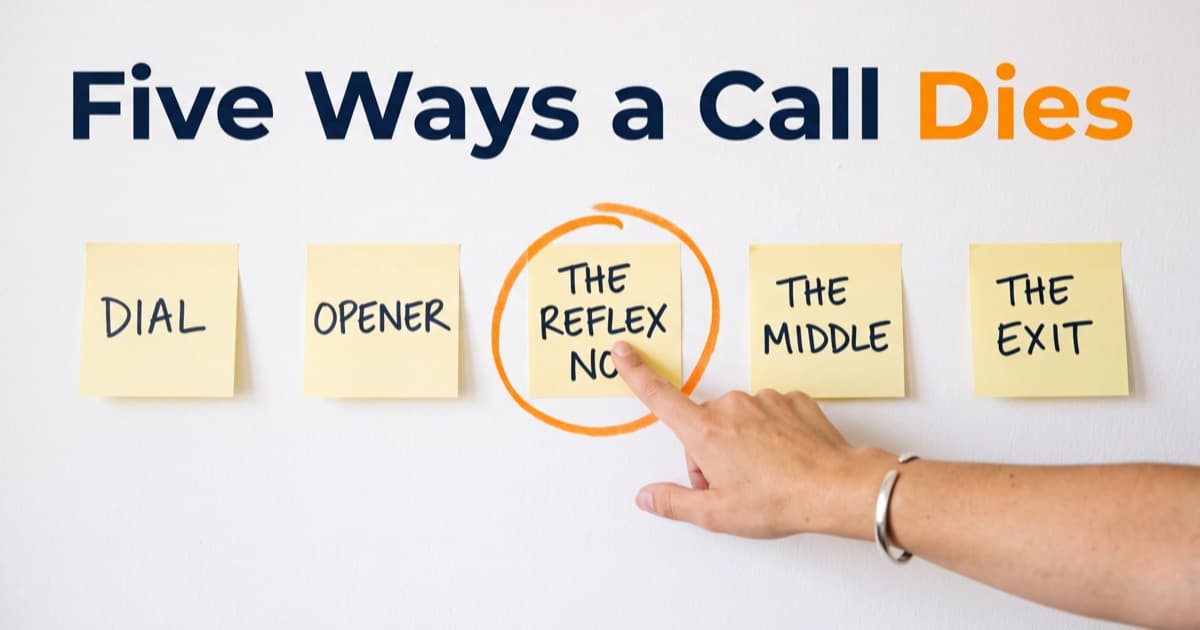
Run it against a buyer who says "send me some times" and means it, not against your memory of the calls that went well, and build the rest of the call around it with our cold calling guide. If the buyer is gone before you reach the ask at all, the problem is further up the call, in the opening line.
Practice this out loud
Run this conversation against a live AI buyer and get a scored review.
Start free, no cardPractice this callPractice this before it counts
ConvoSparr puts you in a live voice call with an AI buyer who pushes back like a real one. Every session ends with a transcript, scores, and coaching notes.
Free to start. No credit card required.