Three Calls to Make Before an Exploding Job Offer Deadline Runs Out
An exploding job offer deadline is softer than it sounds. Test it first, then ask: 'What would it take to get until Monday so I can say yes cleanly?'
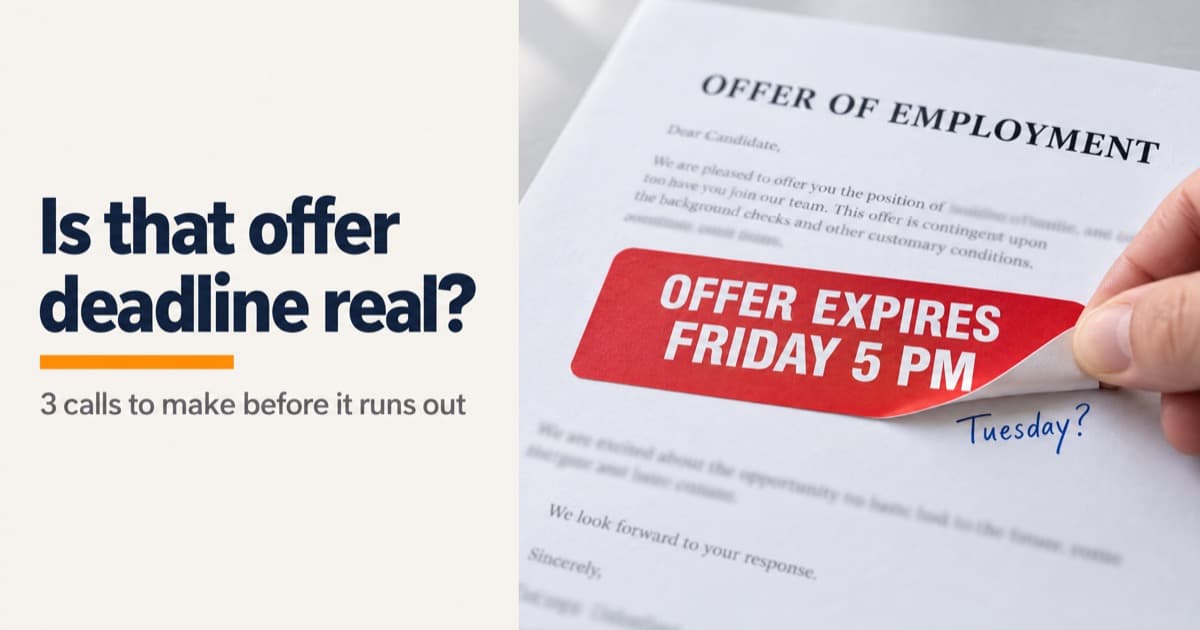
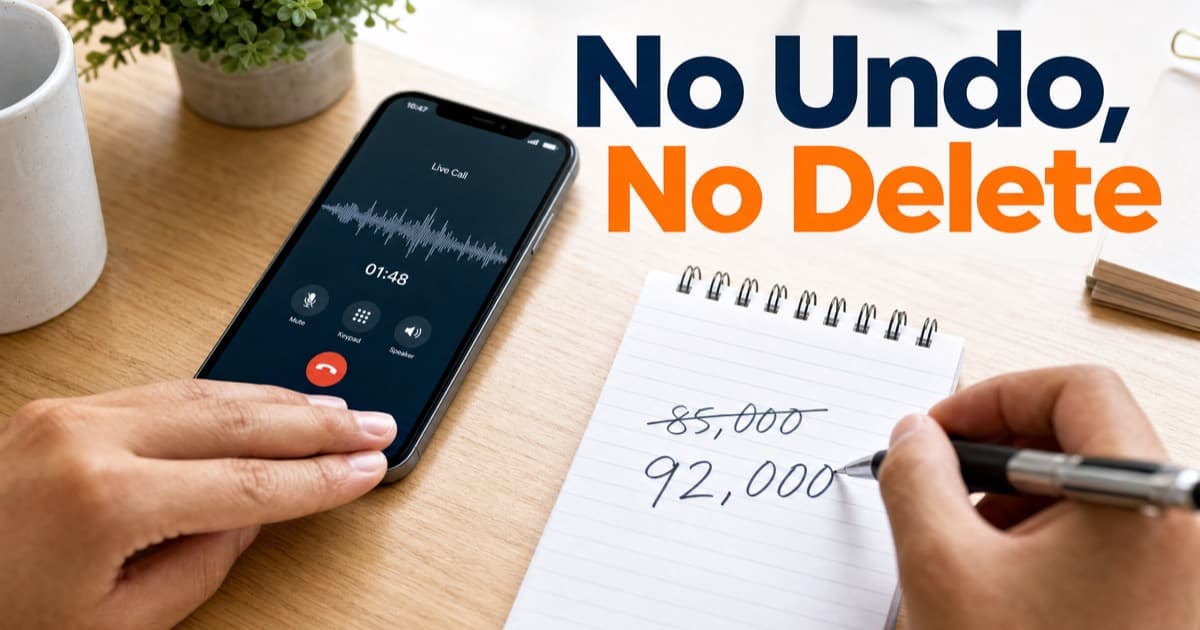
At 4:40 on a Wednesday afternoon, Lucinda's phone lit up with the call she had been waiting three weeks for. The recruiter at Sunrook Solar, a residential solar installer, was offering her the operations manager role: 104,000 base, a start in four weeks. Then came the part nobody mentions in the interview loop. "We do need an answer by Friday at five. We have another finalist, and the team wants to close this out."
Lucinda had a final round with a second company the following Tuesday. She had about 48 hours, a number she was not sure about, and a feeling that asking any question at all might make the offer disappear.
Here is the answer, before the detail. An exploding job offer deadline is rarely as hard as it sounds, and treating it as fixed is the most expensive mistake you can make. Make three calls, in this order: first to the recruiter, to learn what the deadline protects and ask for a specific, short extension; then to any company still in your pipeline, to ask whether they can accelerate; then back to the recruiter, with your decision and any terms you want changed. Ask for a named date, give a reason that sounds like commitment rather than shopping, and never treat the deadline as the reason to skip negotiating.
Why do employers put an exploding deadline on a job offer?
Most offer deadlines exist for one of three reasons, and only one of them is a bluff.
The first is a real second candidate. Hiring teams often carry a backup finalist who will not wait forever, and the deadline protects that runner-up.
The second is an internal clock: a manager going on leave, a budget that expires at quarter end, a start date tied to a training cohort. These are real, but they usually constrain the start date, not the decision date.
The third is pressure. Some companies put short deadlines on every offer because a candidate with less time compares less. This is the one most likely to stretch when you ask.
You cannot tell which one you are facing from the deadline itself. You can tell from how the recruiter answers one question: "What does Friday protect for you?" That question is the first call's whole job, and the salary negotiation guide covers where it sits in the larger offer conversation.
Real constraint or pressure tactic: how to read the deadline
The recruiter's answer to "what does Friday protect" usually lands in one of these patterns. Each one tells you how much room you have and what to ask for.
| What the recruiter says | What it usually means | What to ask for |
|---|---|---|
| "We have another finalist waiting." | Real, but the runner-up can usually wait a few days | A short extension tied to a named date, two to four business days |
| "The manager is out from the 15th." | An internal clock about logistics, not your decision | Decide by the day before they leave; the start date stays the same |
| "The start date is locked to a cohort." | Real for start, often flexible for the answer | More time to decide, with the start date unchanged |
| "That's just our standard process." | Pressure, with no stated cost to waiting | A full extension to the date you actually need |
| "I'd have to check." | The recruiter has room and needs a reason to use it | Give them one sentence they can forward to the hiring manager |
Under all five rows: a recruiter who spent weeks getting you to an offer does not want to restart the search. An extension request that sounds like "I want to say yes properly" costs them almost nothing. One that sounds like "I want to see if someone else pays more" makes them defend the deadline.
Reading about it only gets you halfway.
Run this exact conversation out loud against a realistic AI buyer on ConvoSparr and get a scored review of how you handled it.
The three calls, in order
Call one: the recruiter, within a day. Thank them, confirm you are seriously interested, ask what the deadline protects, and ask for a specific date. Not "a bit more time," a weekday. A named date is easy to approve because it has an end. Raise any questions about the offer itself on this call too.
Call two: every company still in your pipeline. Tell them plainly that you have an offer with a deadline and ask whether they can move their timeline. "I have an offer that needs an answer by Monday. You are my first choice, and I want to know whether a decision by then is possible." Companies speed up for candidates other companies want, and a no is information too.
Call three: back to the recruiter, before the deadline. Either accept, accept with terms, or decline. If you want to negotiate, this is where it happens, and it happens before you say yes, not after. Never let the clock run out silently. Missing the deadline without a word is the one move that genuinely ends offers.
Lucinda's call with Bertrand at Sunrook Solar
Bertrand is the Sunrook recruiter who made the Wednesday offer. Lucinda calls him back Thursday morning. She wants until Tuesday evening, after her final round with Quillmont Health, and she thinks the base is about 6,000 light for the role.
Accepting the clock as given:
Lucinda: Hi Bertrand, thanks again for the offer. I'm really excited about it. I just wanted to ask, is there any flexibility at all on the Friday deadline?
Bertrand: It's tight. We do have another finalist, so the team wants to close this week.
Lucinda: Okay, that makes sense. I'm interviewing somewhere else too, and I was hoping to finish that process first.
Bertrand: I understand. I'd just say we can't hold the role indefinitely.
Lucinda: No, of course. I'll get back to you by Friday.
Lucinda asked a yes-or-no question about "any flexibility," the easiest kind to answer with no, and accepted Bertrand's reason without asking what it protected. Announcing that she was shopping the offer turned a logistics request into a competitive threat, so Bertrand defended the deadline. She never named a date, so there was nothing to approve, and she now decides on Friday with no word from Quillmont and no room to raise the base.
Testing the clock first:
Lucinda: Hi Bertrand, thanks again for the offer. I want to give you a real yes, not a rushed one, so I have one question about timing. What does Friday protect on your end?
Bertrand: Honestly, we have a second finalist, and the hiring manager doesn't want to lose them if this falls through.
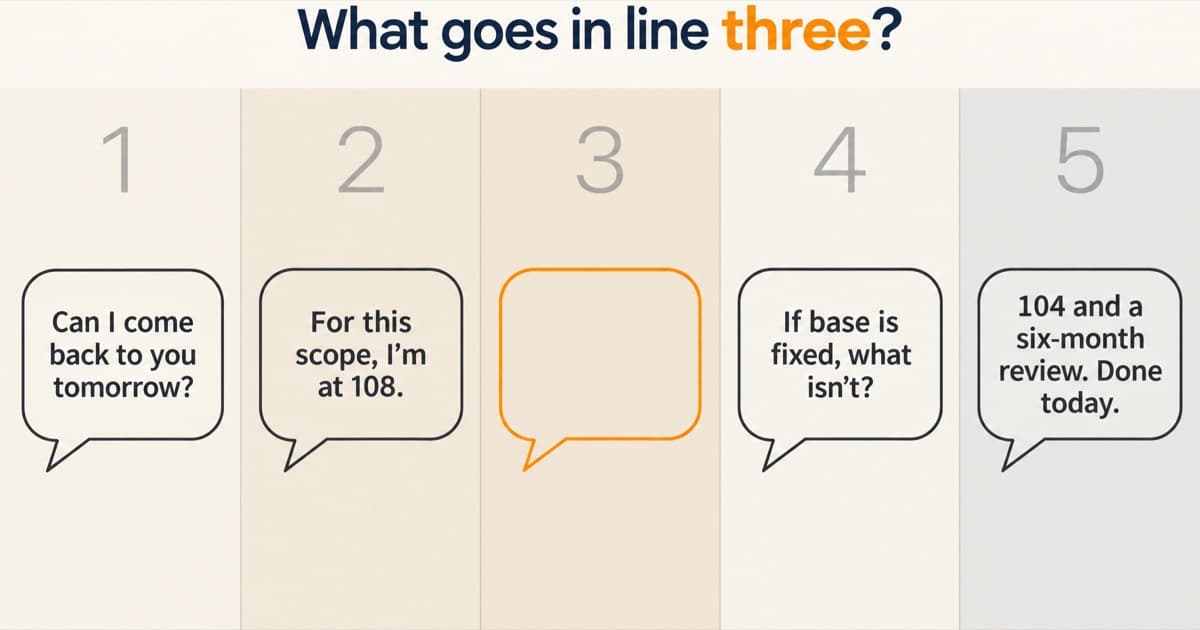
Lucinda: That's fair. Could I have until Tuesday at six? I have one commitment I made before your offer arrived, and I'd rather close it out properly than leave it hanging. Tuesday gives your second candidate an answer within a week.
Bertrand: Tuesday at six. Let me check with Henrike, but I think that works.
Lucinda: Thank you. While you're asking, there's one thing I'd like to raise so you have it all at once. The base is about 6,000 under what I'm seeing for operations roles at this scope. If it could come up to 110, I'd expect to say yes on Tuesday.
Bertrand: I can take both to her together. No guarantee on the base.
Lucinda: Understood. I'll send a short email confirming Tuesday at six so we're working from the same date.
Lucinda asked an open question about what the deadline protects, so Bertrand told her the real reason: a backup candidate, which can wait a few days. She asked for a named date and time, framed the other process as a prior commitment rather than a bidding war, and pointed out that Tuesday still serves Bertrand's goal. Then she bundled one compensation ask into the same call, so Bertrand makes one trip to the hiring manager, not two. Bertrand can forward one sentence: "She wants until Tuesday at six and 110 base, and expects to accept at that number." The email closes the loop so the new deadline exists in writing.
For more lines like these, the salary negotiation scripts page drills the wording, the phone negotiation guide covers holding a position live, and the offer-by-phone scenario runs the full call against a counterpart who pushes back.
Can you negotiate salary while asking for an extension?
Yes, and usually on the same call. Splitting them costs you twice: the first call uses up the recruiter's willingness to go back to the hiring manager, and a negotiation that arrives after the extension can look like you used the time to shop.
The order inside the call matters. Ask for the date first, because it is the smaller request and agreeing to it puts the recruiter in a cooperative rhythm. Then raise compensation with one figure and one reason. End by saying what happens if both land: "I'd expect to say yes." That sentence is what makes the package worth fighting for internally.
If the recruiter says the deadline cannot move at all, negotiate anyway, in the time you have. A hard deadline limits how long you can think, not what you can ask.
Four replies that shorten the clock
Asking for "a little more time." An open-ended request invites the recruiter to pick the smallest number, or to refuse because there is no end in sight. Ask for a weekday and an hour.
Calling it a bidding war. "I want to see what the other company offers" makes the recruiter defend their deadline. "I have one commitment I made before your offer" asks for the same days without the threat.
Going quiet until the last hour. Waiting until Friday at 4:30 to ask for an extension leaves the recruiter no time to get approval. Ask within a day of the offer.
Accepting first, negotiating later. Once you say yes, the deadline pressure moves to your side and the recruiter has no reason to reopen anything. Raise every term before the word yes.
Back to Wednesday at 4:40
The hardest part of Lucinda's situation was not the 48 hours. It was the instinct, in the first minute, that any question might cost her the job. Exploding deadlines are built on that instinct, and it is almost always wrong. Bertrand gave her until Tuesday. Henrike came back at 108, and Lucinda took it on Tuesday afternoon, after Quillmont told her their decision would take another two weeks.
None of that happened on Wednesday. It happened on Thursday morning, on one calm call with a specific date, one figure and one reason. If an offer like that lands on your phone this week, write those three things down before you call back.
Practice this out loud
Run this conversation against a live AI buyer and get a scored review.
Start free, no cardPractice this callPractice this before it counts
ConvoSparr puts you in a live voice call with an AI buyer who pushes back like a real one. Every session ends with a transcript, scores, and coaching notes.
Free to start. No credit card required.
Keep reading
All articles